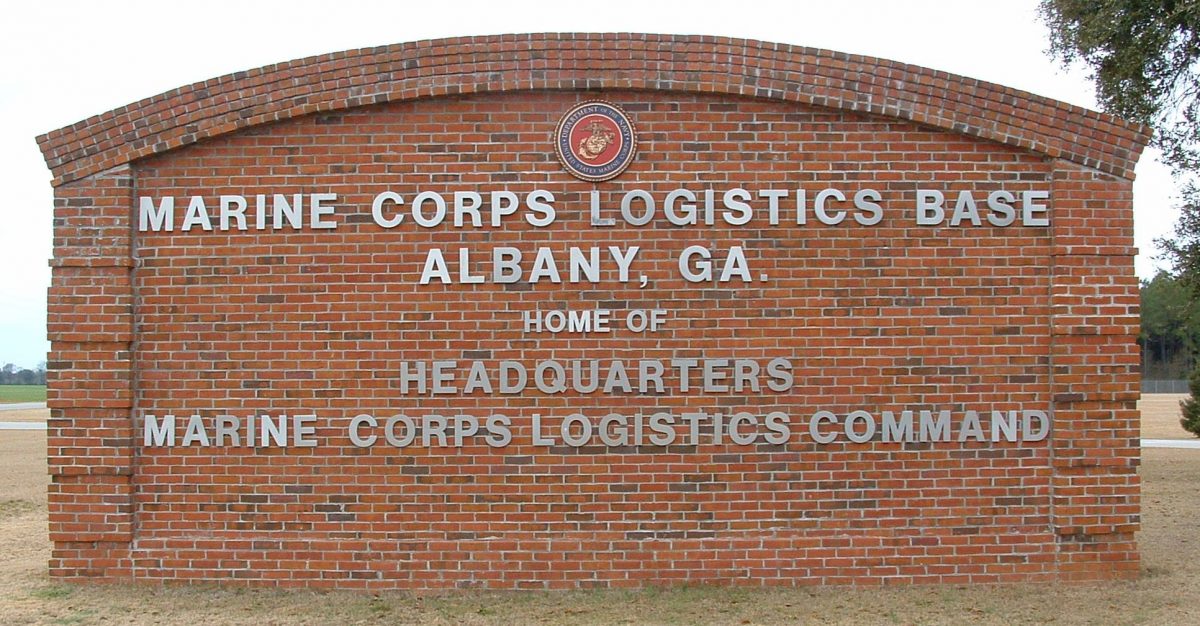
This story took place at MCSC Albany, Ga. in 1964. Sgt. Schultz was a decorated Korean War Vet. Being wounded in Korea, He had lost his left eye and he was given a glass replacement. He was a little guy, about 5′ 5″ and weighed about 140 lbs. He was a Marine with a sense of humor beyond compare. He was sarcastic and outright funny and could make anyone laugh with the antics he could pull off. On an overseas tour, he had a spare glass eye made up in Japan but the exception was that this eye had a tinny, gold Marine Corps emblem in the center. He called it “His inspection eye”.So, any time there was to be any major inspection like a C.G., a junk on the bunk, or whatever, he would wear his eye with the emblem. Schultz favorite move was to walk up to a group of new Marines who had never seen his inspection eye and shock the hell out of them. Every one would react the same way. Their head would jerk back, Their eyes would pop wide open and their jaw would drop. He would then laugh and say “knocked off their skivvies”.or one thing or another. On this Morning we where geared up for a Commanding Generals inspection. Schultz took his place as 1st squad leader of our platoon. I was 2nd squad leader and stood directly behind him with a perfect view of the reactions he would get. I knew off the special glass eye but had never seen it put into action at an inspection before. As we where about to be called to attention, Schultz said “every one ready for some fun”!!. The first officer to inspect (as I recall) was a Lt. Colonel. Schultz raised his rifle to inspection arms, looking down to inspect for a clear chamber then raised his head. With that the Colonel reacted the same way everyone did then spoke. Ah Ah Ah AND JUST WHAT IS THAT THING!!!?? Sir, that is my glass eye, Semper Fi and Gung Ho sir. The Colonel stuttered saying he had never seen anything like it before. Schultz answered that not many had either Sir, had it made up in Japan a few years ago. Well said the Colonel when this inspection is over, you are to proceed to sickbay and have that thing surveyed ASAP. From behind, I stood there tight-lipped trying not to burst out laughing. Schultz mumbled ” wonder if his bowels moved”. I mumbled back “I believed they may have”. In the Corps there was always one Marine or another who could bring down the house with humor and Sgt. Schultz was one of them.
Category: Main
MARINE OF THE WEEK // He refused to leave a fallen Marine behind…
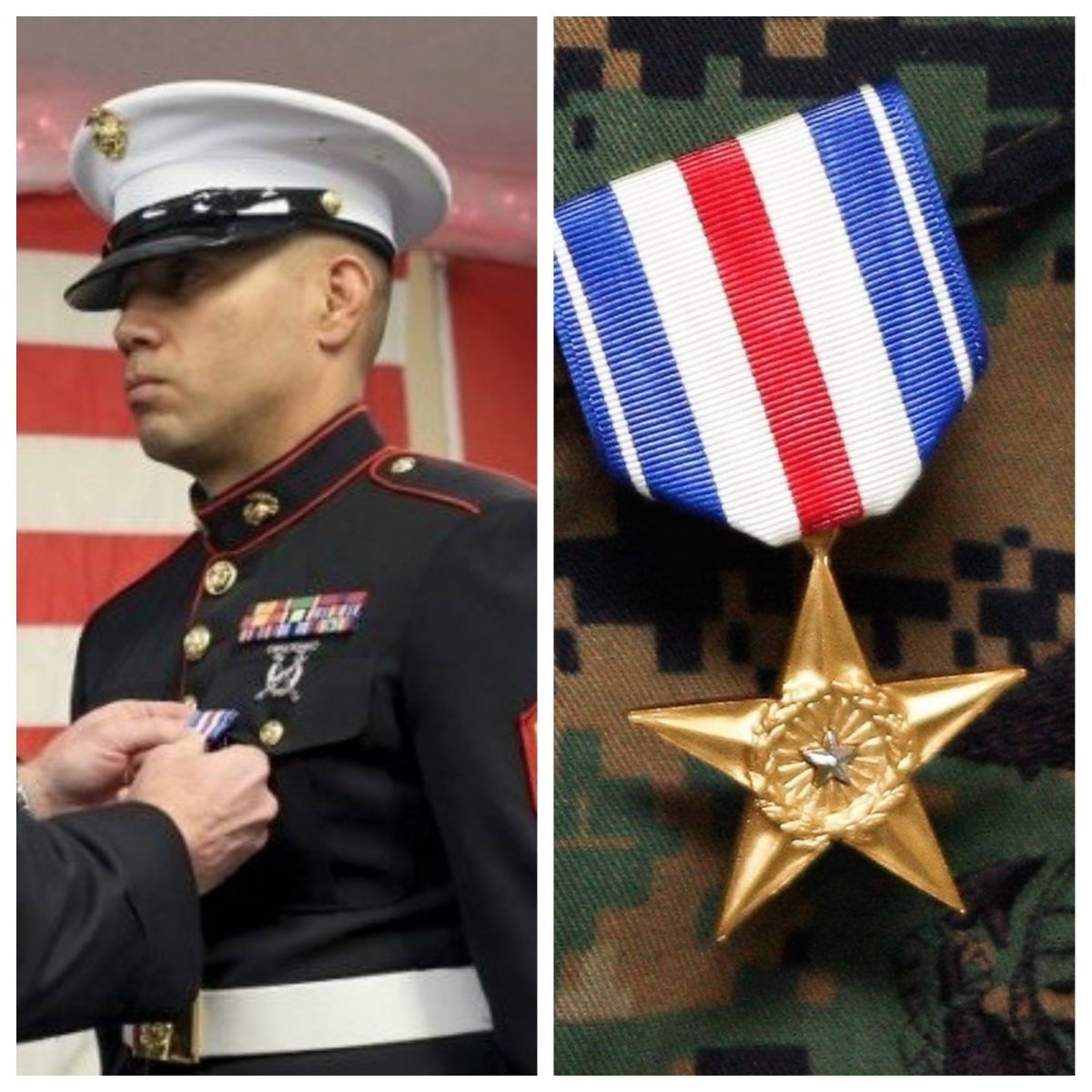
Sgt. Eubaldo Lovato
1st Battalion, 8th marines
November 11, 2004
Operation Phantom Fury, Fallujah, Iraq
Award: Silver Star (upgraded from Bronze Star)
During the second battle for Fallujah, then-Corporal Lovato and his squad was ordered to clear a house. What the Marines did not know is that insurgents had barricaded themselves behind sandbags in one room.
When a fire team entered the room, Cpl. Travis Desiato was killed immediately by a barrage of AK-47 fire and fell to the floor. The insurgents put up such a volume of fire that the other Marines could not retrieve their comrade. The Marines fired blindly, unable to see the enemy fighters behind their barricade.
Lovato and the others in his squad could see Desiato on the ground. They tried calling out to him but he didn’t answer. A group of five Marines including Lovato made several attempts to reach Desiato ’s body. They threw C4 plastic explosives into the room, but it generated so much smoke that the Marines could not see anything. Then one Marine attached part of a shattered mirror to a stick, which allowed him to see where the insurgents were.
Pinned by enemy fire, Lovato manuvered to retrieve more grenades, with bullets passing through his pants pockets and sling.
Eventually Lovato was able to crawl to reach his Marines and asked a tank to blast the back of the building. The Marines stormed the building and killed the enemy inside. Lovato retrieved Desiato’s body.
Question For The Vets That Know What Honor Is!

This is just a quick question to all of the military vets out there. Would you rather go back to the field and defend you country with your life, or, would you rather join the NFL and get to do what they usually do and get paid millions? By the way, I’m only asking this question so that I can write about the salaries for you guys in the military and the NFL. It’s for school and I don’t know any military guys that live near me. Also, if you’re an Air Force vet, plz don’t be offended by the pictures that are on here. I found them funny.
Aboard the USNS Gaffey March 1965 to Yokohama, Japan
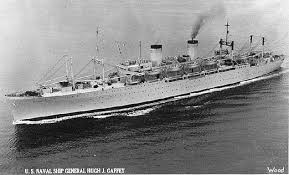
Just joined the story time at Sgt Grit Community and read the story about a trip to Japan. Loved it. So i had to share my experience. We pulled out of San Diego on March 5th heading, initially, for Pearl Harbor, a five day voyage. I was a Buck Sergeant so i was birthed in the lower deck, three stack bunks. I was really enjoying the cruise until the ship left the harbor. As soon as the bow hit the Pacific currents the bow took a bow and so did my stomach. Within minutes I was hanging over the rail emptying my stomach overboard. To say i was sick is an under statement. When chow call was announced I joined the chow line, filled my tray, found an open seat at one of the metal tables welded to the deck and bulkhead. It took just one bite of food and, yep, you guessed it, I was off to the head. All that day I was sick and sleeping didn’t’ abate the problem. The next morning a sailor saw my condition and took me to the galley and gave me an empty #10 tomato can. I carried that can four two more days,. On the third day my platoon sergeant took me to sick bay and one look at me by the Naval Doctor and I was put in bunk Nd the Doc gave me a shot. What it was I never found out, but it seemed like minutes my stomach settled down. He also gave me some Dramamine and I spent the rest of the voyage walking about 2 inches off the deck. We had shore liberty for a few hours in Honolulu and pulled out of Pearl the next morning heading for Yokohama. Everything was great for the next 8 days, then we caught the tail end of a Pacific typhoon. The old Gaffey took a beating. The night before we pulled into Japan the waves and swells were so powerful the fan tail seemed to jump out of the ocean and the tork was so powerful one of the drive shafts that turned one of the propellers snapped. For the rest of the voyage Gaffey limped into Yokohama harbor on one screw. That’s not all. During that fateful night the Captain was thrown from his bridge chair, hit the deck and broke his hip. Ouch!… Lastly, once we were docked the PA system announced the names of 120 Marines telling them to get their gear and report to the rear gang plank. I was one of those whose names was called. Once all 120 men were formed into a platoon, the Gaffey was pulled out of the harbor and I never saw it again. However, one of the Staff NCO’s told us the rest of those Marines were being taken to Viet Nam.
VMA 225 On board the USS Enterprise CVAN-65 during the blockade of Cuba in 1962
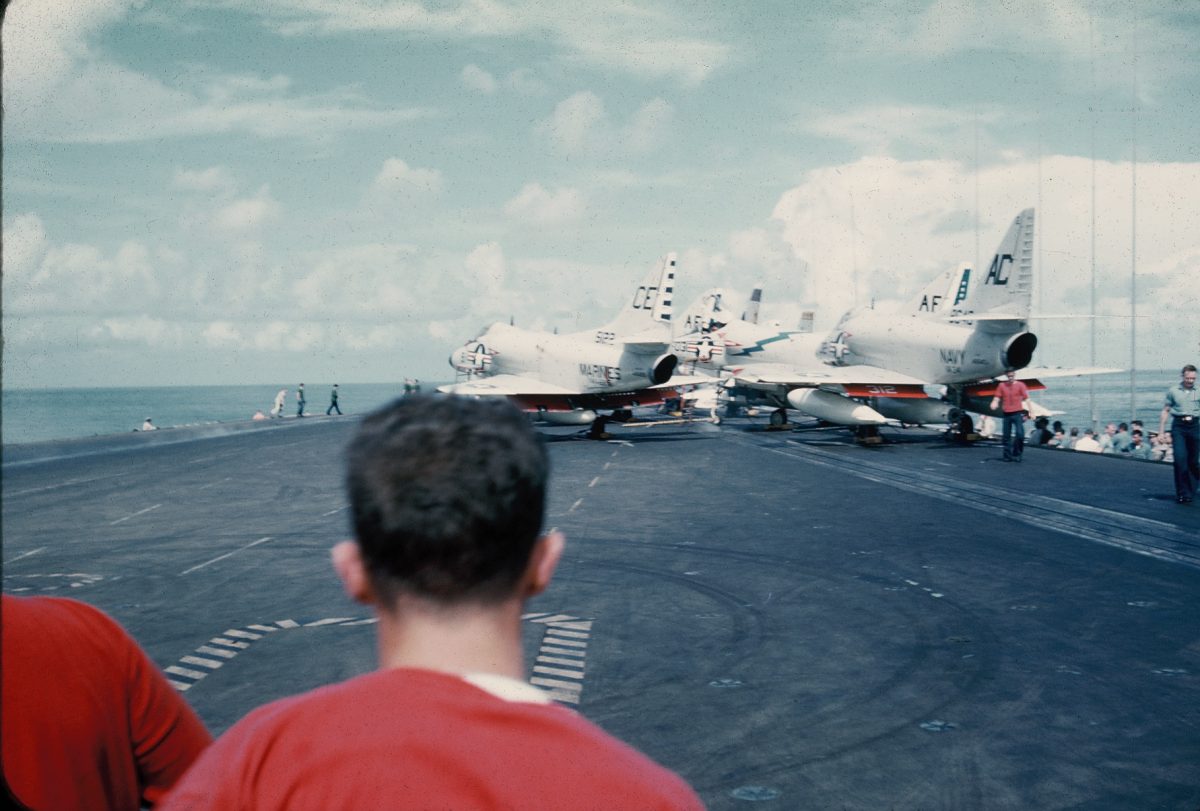
VMA 225 was the first Marine squadron to serve on a nuclear powered carrier. we were on board the Enterprise from Oct.20 to Dec.9 1962 as part of the blockade of Cuba, I was a 6511 MOS (aviation ordnance) & I still remember the first three days aboard ship we only got three hours sleep getting all our A4D 2N Skyhawk aircraft configured with external stores racks and loaded with munitions with pilots sitting in their aircraft on all four cats with sealed orders as we thought we were going to war.
“The P.S.I.D. Incident”

From 1987 – 9, I worked in the Intelligence Management Branch of HQMC (INTM). One of my colleagues and comrades there was LDO 0205 Captain Joe Burroughs, a PGIP classmate from 1984-5. Joe was working on some sensitive projects, while I was assisting LtCol. Steve Foster (of MCIA fame) in the main part of INTM – people and training.
Pacific crossing
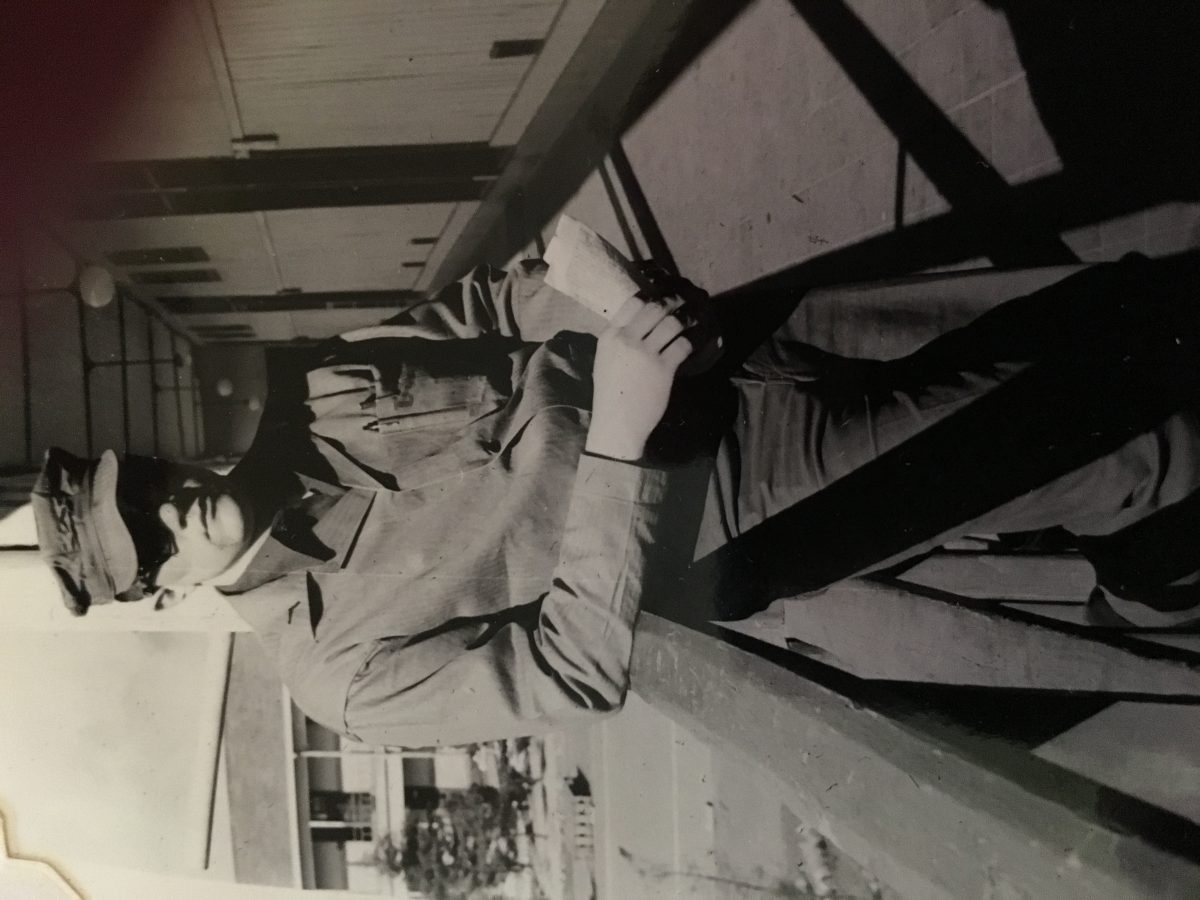
What fun it was for me to read Jim Barber’s account of sailing on the good ship Breckinridge. I, too, shipped to Japan on her January, 1958. His tales of the challenges in the forward head were honestly right on. I want to add how difficult it was maneuvering safely on the slippery liquid and other matter on that sloped tile floor in typhoon conditions. He didn’t mention the joy we experienced when the above deck dependents of other services carried their pets down the ladder to do their business on the tiny deck space the marines were mounded, gasping for fresh air. Overall, it was a fine 23 day cruise with the screw out of the water about half the time. To you and your other marine subscribers, Semper Fi.
From Camp Pendleton to San Quentin
I was assigned to Base MP Company Camp Pendleton. In late 1958 or early 1959, on a Sunday evening, I manned a single-sentry gate just off the Coast Highway US101. As usual, traffic was slow since buses serving the base used the gates to my south (from Oceanside) or to my north (from San Clemente). A car with no base sticker approached. The driver, in civies, showed his valid ID and liberty cards. He asked for a temporary base pass that would give him time to get a base sticker. The car had Ohio plates. None of this was odd or unusual. What caught my attention was the broken passenger side wing window and bits of broken glass on the otherwise empty passenger seat. Even this wasn’t all that unusual since no one in his right mind would break any other window if he had locked his keys in the car. Or stolen the locked car. I asked for his Ohio vehicle registration to verify his name was on the registration and he could be on his way with his temporary pass. He fumbled in the glove box a little and asked if he could pull into the parking area to dig out the registration card. Since he was blocking the roadway. I said he could and went into the guard shack to get the pass. He pulled into the parking area, executed a U-turn, and drove off base at a high rate of speed. There I was with no stolen vehicle and no prisoner. But I has his ID and liberty cards and a full description of the vehicle. I wrote a detailed incident report and sent it and the ID and liberty cards to the Provost Marshall. Two or three days later I was in the barracks and got called down to the 1STSGT’s office. He told me I was to report to SSGT Dick Tracy in the PM’s Criminal Investigation Division. Asked why I would get such an order, I said I’d be real surprised if it didn’t concern the incident report about a probable stolen vehicle. As I walked across the parking lot separating our barracks and the PM’s office, I wondered if I had screwed up the paperwork. In the PM office I told the receptionist I was PFC Murphy reporting to SSGT Tracy. Before she could say anything, a SSGT across the room was up and bounding towards me with a big smile and a hand out to shake mine. “Glad to see you. Thanks for coming. Come on in so we can talk. Have a seat. Can I get you a cup of coffee?” I decided I hadn’t screwed up. Tracy and another investigator got my report and went to the suspect’s unit. He confessed and was taken into custody. He had stolen the car in the Los Angeles area and had hot-wired it, They also found marijuana in his locker, He had gotten on base after parking the car in Oceanside and taking the bus onto base. MPs rarely heard anything about what happened after writing a citation or incident report. By chance, a few months later I met a clerk from the Brig Company who told me the prisoner got a courts martial, a Dishonorable Discharge, and 6 months confinement. He did not finish the 6 months confinement. He cut a plea deal with California authorities for felony auto theft. The Marine Corps let him go early to begin a 4-year sentence in San Quentin Penitentiary.
A reunion 50 years later
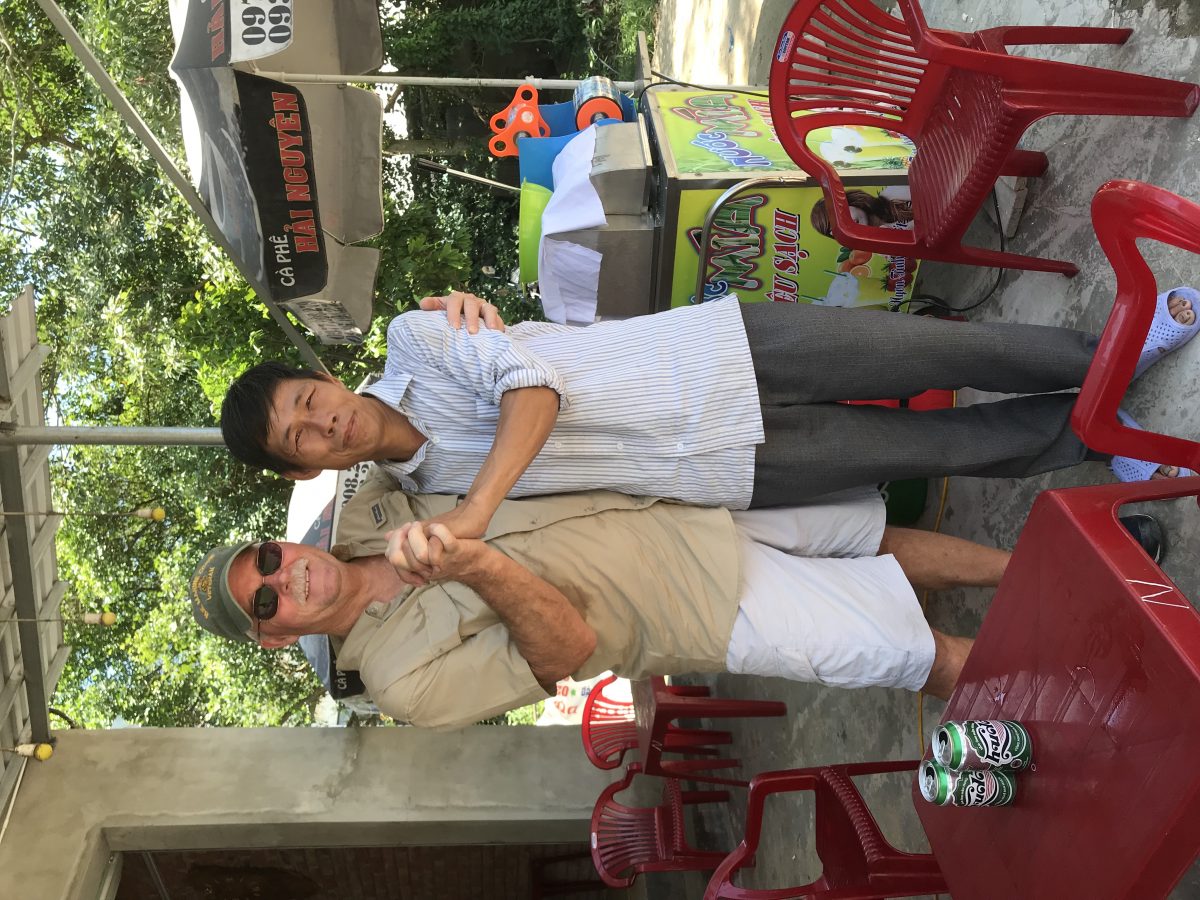
I returned to Vietnam May 1st with my wife to walk the ground again and heal old wounds. We journeyed north from DaNang to the DMZ and back through Hue. In 1968 I was in a CAG compound for 4 months just south of Hue during the Tet offensive. While interacting with the villagers in our area I became friends with a young boy named “Jim-mie”. A nickname we had given him. I had a photo and a memory of where the village was and with the help of our guide I was able to find him. We hugged, We cried, and I met his wife and 2 sons. It was truly a guided moment that we will never forget.
REMEMBERING ON MEMORIAL DAY
When someone asks “Have you gone anywhere on vacation?” and I answer “Yes, I went to Peleliu” I get different responses. Some ask “What’s Peleliu – like Disneyland?” Others just go blank, so I offer “It’s an island in the Pacific, part of Palau.” But if that person is a veteran, he might just say “Whoa!” with a little tone of reverence, for whether he is Army, Navy or Marine Corps he probably knows that Peleliu is regarded by many historians to be the most savage battle of World War II – harder, even, than D-Day in Europe, Battle of the Bulge, Guadalcanal, Tarawa or Iwo Jima. It tops the list in the Pacific war in the percentage of American casualties of those who fought there.
Peleliu – not on the original list of the island-hopping campaign but added to appease Gen. Doug MacArthur, who insisted the Japanese airstrips on the island posed a threat to his invasion of the Philippines – was invaded at 08:32, on Sept. 15, 1944. The invasion beach, about a thousand yards wide was split with part designated Orange Beach and the other White Beach. The initial assault was conducted by 9000 Marines after a pre-invasion bombardment, which Rear Admiral Jesse Oldendorf believed was successful, claiming the Navy had “run out of targets.” In fact, Japanese defenses were “virtually unscathed” and 10,900 Japanese soldiers waited for them. The situation went downhill from there. Hidden gun emplacements on each flank of the beach caught the Marines in heavy crossfire with 47mm cannons, 20mm cannons, heavy and light machine guns and rifles. By 09:30, the Japanese gunners had destroyed 60 landing craft. By the end of the day the Marines had already lost 200 dead and 900 wounded. Struggling to get off the beaches, Capt. George Hunt was assigned to take “The Point”, the Japanese strong-point which commanded the left flank. The 175 men of K Company, who had lost most of their machine guns while landing, fought all day trying to work around the position, finally capturing it but running low on supplies, out of water and surrounded. 30 hours of Japanese counterattacks, often hand-to-hand, failed to dislodge them. By the time Hunt’s Marines were reinforced his command had been reduced to 18 men.
The battle got worse. After taking their initial objectives the Marines pivoted left and began the struggle to fight their way down the length of the small coral island which had two ridges running parallel with a very narrow valley in between. The ridges were riddled with more than 1000 caves – many inner-connected – filled with fanatical Japanese soldiers under orders to fight to the death. One battle on Bloody Nose ridge cost 1st Battalion, 1st Marines 71% casualties over 6 days. In one engagement, Capt. Everett Pope earned the Medal of Honor leading his company. Pope and his company “penetrated deep into the ridges”, fighting to reach the crest of one, and then trapped at the base of the ridge. Setting up a small perimeter, the company “was attacked relentlessly by the Japanese throughout the night. Soon out of ammunition, the Marines “fought with knives and fists, even resorting to throwing coral rock and empty ammunition boxes at the Japanese.” Holding out until dawn, still under deadly fire, they evacuated the position. Only nine men remained of the original 90 that started the fight.
After just 8 days, Chesty Puller’s 1st Marine Regiment had suffered 70% casualties and was pulled off the line, replaced by the Army’s 321st Regimental Combat Team. By 15 October the 7th Marines had suffered 46% casualties and were replaced by the 5th Marines. The bloodfest lasted for another 6 weeks. In the end the American forces – Marine, Army and Navy – suffered 2,336 killed and 8,450 wounded. All but 19 of the 10,900 Japanese completed their orders to fight to the death, the survivors either too severely wounded to resist or knocked unconscious by concussion.
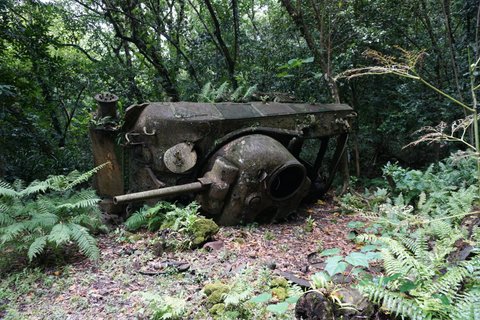
Today, Peleliu is probably the most complete historic battlefield in the world – its own monument to those who fought, suffered and died there. It’s a Pacific paradise with beautiful scenery, a magnet for those who love to scuba dive. But beneath the jungle that covers the small island it is covered in the carnage of battle. My wife and I climbed the paths between the ridges, crawled in, through and out caves littered with Japanese cannon, machine guns, helmets, comm gear and dispatch cases. We saw the wreckage of aircraft – Japanese and American – LVTs with 37mm cannon mounted, destroyed Japanese tanks. We saw Honeysuckle Rose, lying on her side, her belly ripped open by a 250kg bomb the enemy had buried as a land mine. The Marine tank had just completed a mission; the rescue of the 2 man crew of a Navy aircraft downed in no-man’s land, and was returning to the fight when she and her crew died. We walked White Beach and poked around The Point where there’s a monument to Capt. Hunt and his men. It’s hard to describe the humble feeling one gets when realizing the true horror of this small part of the global war and the heroic effort of those who fought here.
But there is a tragic side to this heroism. Most historians believe this battle didn’t need to be fought – that the island could have been neutralized by air and sea units and bypassed. While Doug MacArthur waded ashore in Leyte in front of a worshipful press and movie cameras, men died by the hundreds on the tiny coral island that was Peleliu. High ranking officers of our military had argued against the invasion. But the military is not a democracy like that which it exists to defend. Once their civilian leadership has heard and rejected their opposition they, and the men under them down to the lowest rank, simply salute, say “Aye, Aye, Sir”, do an about face and proceed to carry out the mission as given to them. This has been our way for 273 years, as our young men and women carry out the orders – right or wrong – of our elected (and by default, our people) representatives. So as a free and independent nation as we celebrate Memorial Day remember that,
“If you are reading this, thank a teacher. If you are reading it in English – thank a veteran.”
Note:
Jim Barber is author of “SH*TBIRD! How I Learned to Love The Corps”