Hill 488

Hill 488 was just another landmark in the jungles of Vietnam. For the 18 men of Charlie Company, it was a last stand. This is the stirring combat memoir written by Ray Hildreth, one of the unit’s survivors.

On June 13, 1966, men of the 1st Recon Battalion, 1st Marine Division were stationed on Hill 488. Before the week was over, they would fight the battle that would make them the most highly decorated small unit in the entire history of the U.S. military, winning a Congressional Medal of Honor, four Navy Crosses, thirteen Silver Stars, and eighteen Purple Hearts – some of them posthumously. read more

MARINE OF THE WEEK // “It was probably one of the hardest things I ever did.”

Staff Sgt. Timothy Williams
Reconnaissance Section Assistant Team Leader, RCT-6, 1st Marine DivisionI Marine Expeditionary Force (I MEF).
July 10, 2012
Award: Silver Star

While a member of a 15 man joint Afghan National Army and Marine force, the patrol came under intense and accurate fire from a numerically superior force. Throughout the following 10 hour engagement Staff Sergeant Williams took direct action to counter the ambush and repeatedly displayed superior leadership while directing his team under heavy small arms fire from fixed Taliban positions. Upon discovering his team leader was seriously wounded, Staff Sergeant Williams sprinted across 60 meters of open terrain, exposing himself to accurate enemy fire in order to aid and evacuate the wounded Marine. Staff Sergeant Williams exposed himself to accurate enemy fire yet again when he carried the wounded Marine over 300 meters of uneven terrain to the medical evacuation platform. He then took charge of the joint element and continued the assault on the enemy, personally killing 5 enemy fighters, while moving the team more than 2600 meters toward a trapped Quick Reaction Force and establishing firm defensive positions repelling the enemy. Through his sound tactical and technical proficiencies, he led his element to effectively neutralize numerous Taliban positions and an estimated 20 Taliban fighters across 3,000 meters of arduous terrain. By his bold leadership, extraordinary initiative, and undaunted courage, Staff Sergeant Williams reflected great credit upon himself and upheld the highest traditions of the Marine Corps and the United Stated Naval Service. read more

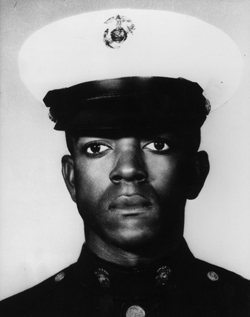
This week in Marine History: PFC James Anderson Jr.

August 21 marks an important day in Marine Corps history—the awarding of the first Medal of Honor to an African-American Marine, Private First Class James Anderson Jr.

PFC Anderson was born in 1947 in Los Angeles, California. After graduating from high school, PFC Anderson spent a year and a half at a Los Angeles-area junior college before enlisting in the Marines in early 1966. read more

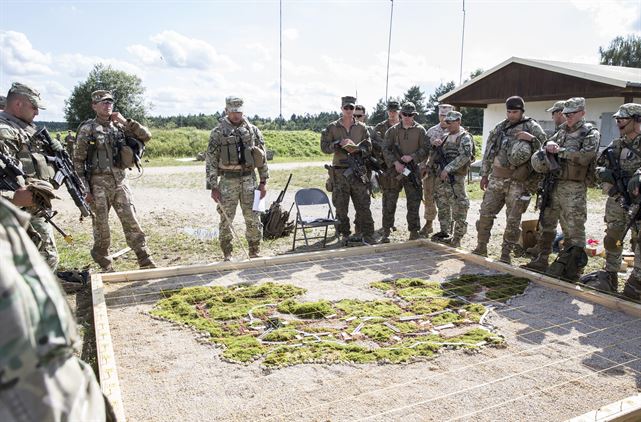
6TH ANGLICO MARINES AND GEORGIAN SOLDIERS PREPARE FOR DEPLOYMENT IN SUPPORT OF OPERATION FREEDOM’S SENTINEL

U.S. Marines with 6th Air Naval Gunfire Liaison Company, Force Headquarters Group, Marine Forces Reserve, and soldiers with the 31st Georgian Light Infantry Battalion, conducted a Mission Rehearsal Exercise as part of the Georgia Deployment Program- Resolute Support Mission aboard the Joint Multinational Readiness Center, Hohenfels, Germany, Aug. 16-22, 2017. read more

KheSanh Air Support

While stationed at KheSanh during the siege , We were not able to get much air support mostly because of enemy fire or cloudy weather. The C-130s tried to land they were called mortor magnets and would slow down and incoming Marines aboard would shove the supplies out and jump out and run for the nearest fox hole while the planes would hit full throttle and take off. The B52s would fly over us from Okinowa, you couldn’t see them but you could feel the ground shake when the bombs landed. The one thing I’ll never forget is that on one clear day the jets were flying close to us and bombing the hell out of the ,Nva’s , then one of the jets flew down low over the air field and tipped his right wing to us which we took as a salute. When we finally left KheSanh by convoy you could see the craters that the B52s left and some of them you could see some dead gooks laying in them read more

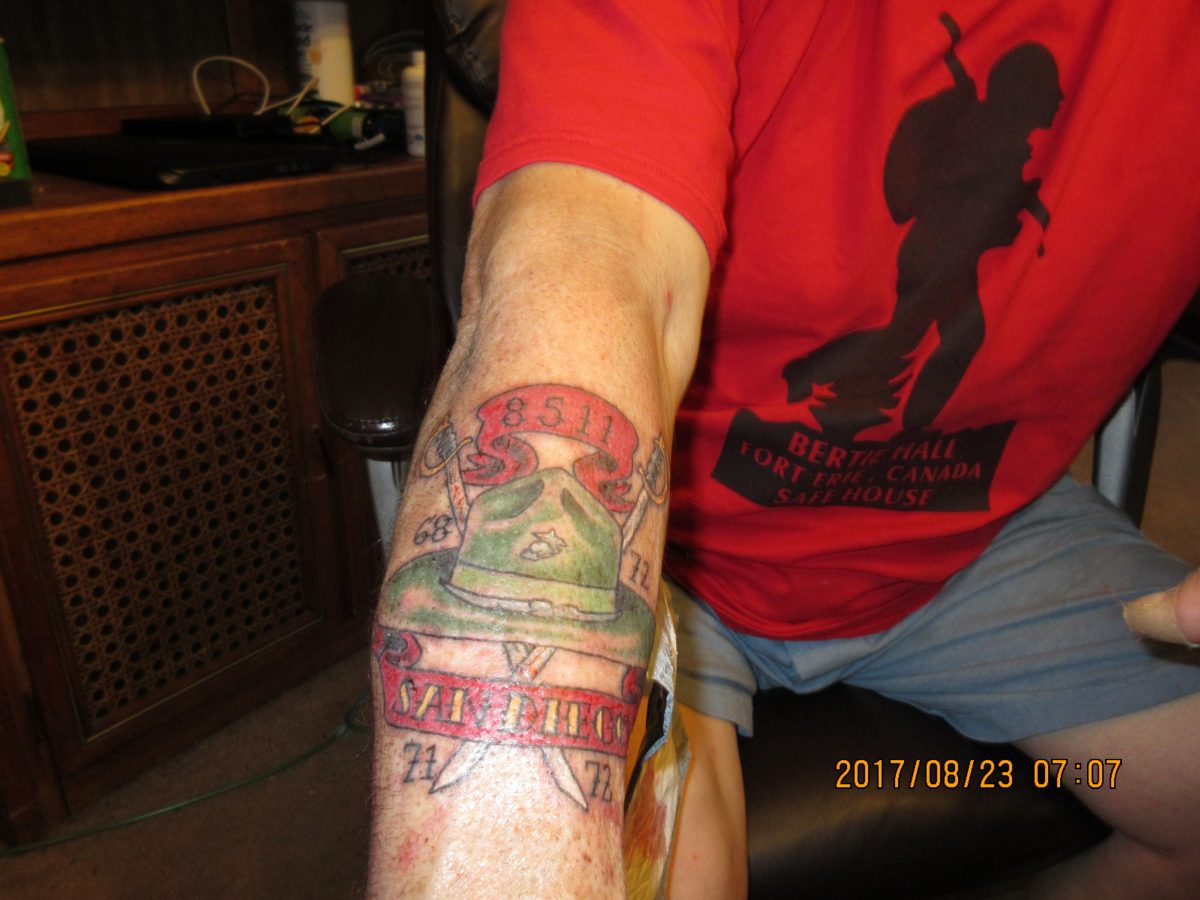
I almost got there.

I was a Corpsman, E-4, stationed at Portsmouth, Virginia, in 1968, looking forward to completing Pharmacists Mate School, when the word came down that “volunteers” were needed. The 28 students all put a dog tag into the bowl, and lucky me, I was the first name pulled. Next stop: FMF training, Camp Pendleton, Ca. . After training, I was assigned to Hotel 2/27. Just before receiving orders to Viet Nam, I suffered a severe right leg injury. Next step: Medical Discharge. This year marks my 50th HS reunion, and I think back to the many members of my class that went to Nam. Many of them did not make it back alive. Of the Corpsmen I trained with, many of them gave their lived. If it hadn’t been for the injury, I would have been there with my friends, instead of sitting safe at home. I miss them all greatly and have, over the years, prayed for them and their families. read more

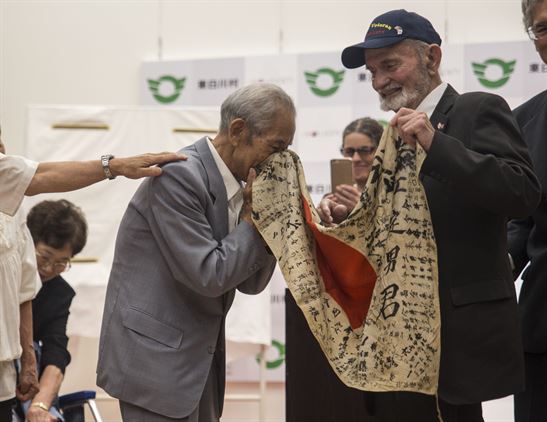
MARINE RETURNS JAPANESE WWII FLAG TO ORIGINAL FAMILY

Deep within the mountains of Gifu Prefecture, in a small farming village hidden away from the fast-paced city life, the family of a fallen Japanese soldier eagerly waited for the return of a precious heirloom. For the first time in 73 years, the Yasue family can finally receive closure for the brother that never came home from war. read more

The night I became a RadioMan

In 1970, I served with Golf Co., 2nd. Bn. 5th. Marine Regiment out of An Hoa. The company was attached to another outfit as a blocking force in a weep operation around Liberty Bridge. At night, we were moved in to position on an old railroad bed and placed on line. The 3rd. Plt Lt. sent three men out on an LP per S.O.P. and, in about an hour, one of the men radio back that there was movement to they front. Well, the weep had not started yet so the Lt. was wondering what might be going on. He ordered the LP to move forward in order to determine what or who was out there and how many. No respond! After while, the young Marine radioed back that they took a vote and decided not to move. The men were ordered to return to the company’s line—NOW!. The Lt. questioned each of the men and learned that the person on the radio was on first watch. The other two had no idea what was happening or why they had been called back. I happen to be next to the Lt. when he took the radio away from this young Marine and informed me that I would be the squad radio operator henceforth. I can not recall the name of the equipment that was used by the C.O. to send secured messages to our rear area but I do know it was heavy and the guilty Marine hump that thing the whole time I was there. On the up side, he was never sent on rovers, sting sites, o.p. or l.p.. He never went outside the C.P. once we were settle in a place. Maybe the Lt. understood what this Marine was experiencing out there in the dark and gave him a way to save face. I’m
certain that no one else wanted to hump that thing or considered him lucky ! read more