Once upon a time or so I’ve been told, a SGT was sent to Marble Mountain w/ a req for some extra beer from the flyboys. While he was waiting for it to be loaded, he helped himself to the the tap left unguarded (only the flyboys would be this trusting) behind the bar.
Category: Marine Corps Stories
Doberman’s in WW II
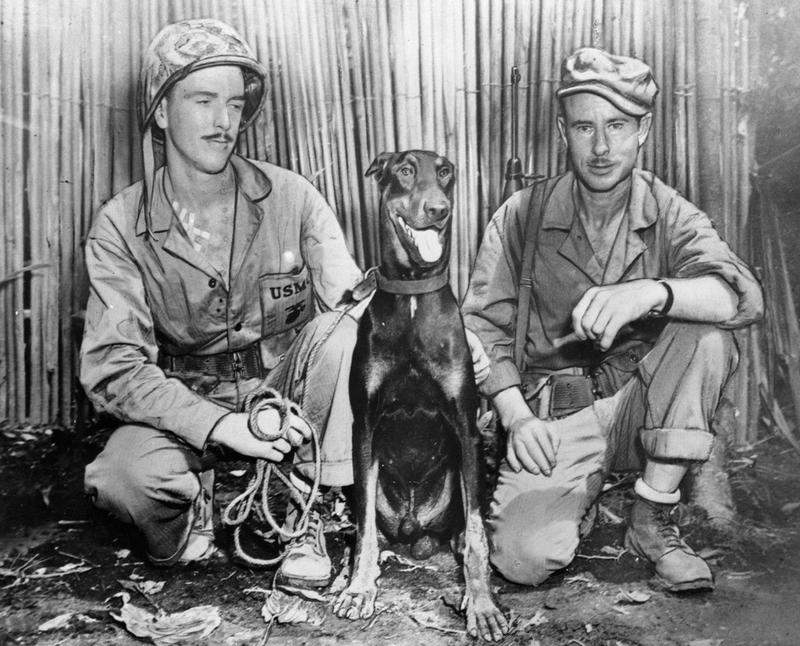
Cappy and the Devil Dogs of the Marine Corps
Few breeds of dog are as intimidating as the Doberman. Powerful, strong, and imposing, this breed was designed to be scary enough to ward off danger, which is why the Doberman breed was adopted by the United States Marine Corps as their canine companion of choice. The USMC’s Devil Dogs, as they became known, served alongside the Marines…and the heroism of one of the Devil Dogs, Cappy, saved the lives of hundreds of men during the Battle for Guam.
64 years ago, a drill instructor marched Marine recruits to their death at boot camp
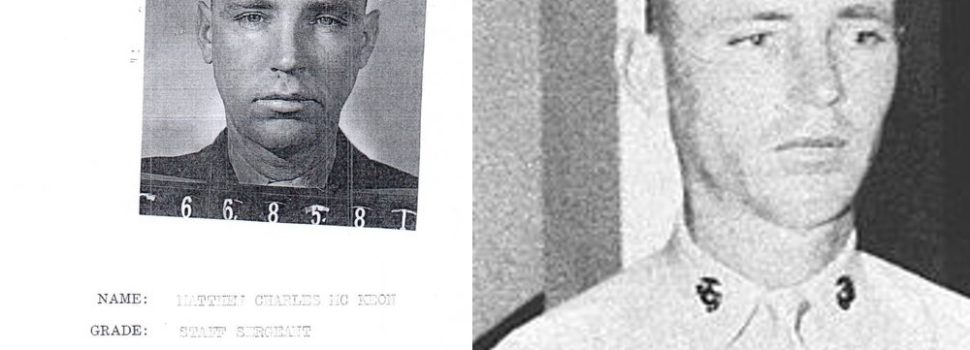
While many argue that their basic training or boot camp was “treacherous” and harder than those of military personnel to follow, a general consensus is that these perceptions are often personal exaggerations that are as old as soldiery itself.
However, one cannot deny the harshness of training when it costs a significant number of human lives in a single moment- a moment that -64 years ago to this very day- would forever change the course of history for the US Marine Corps.
Semper Fi Brother, Mamadou “Mike” Balde
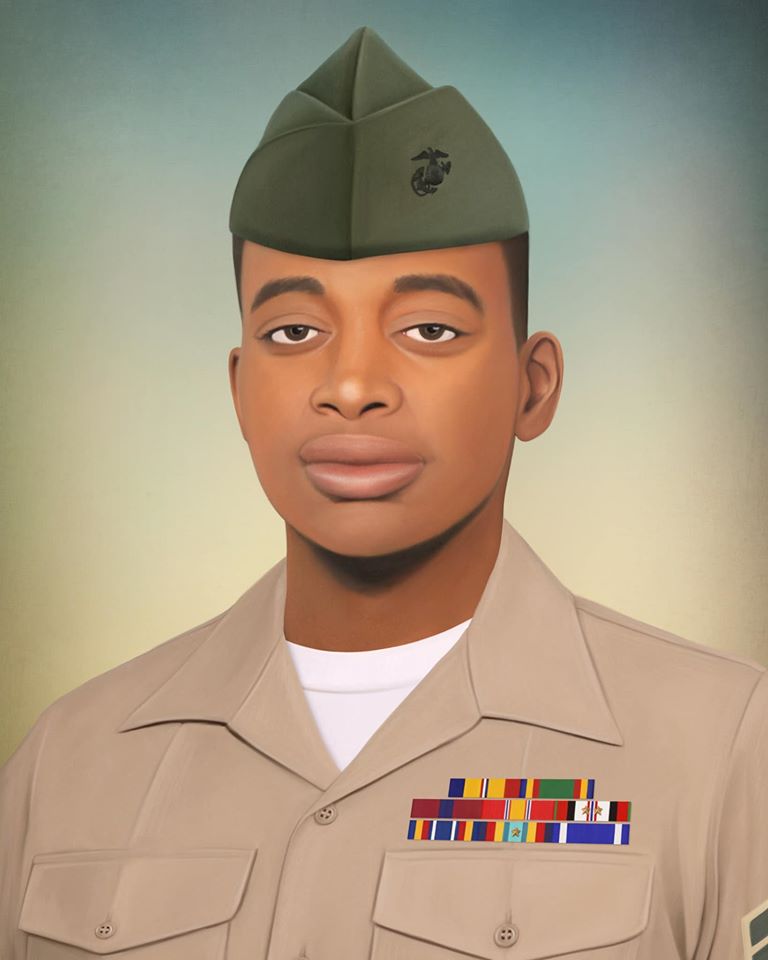

Last Tuesday, 29-year old Mamadou “Mike” Balde was on the platform of Chicago’s Jackson Station when four cowards confronted him and started an argument. Rather than get involved, Mike turned to walk away when they began to violently assault him. One of the men intentionally pushed Mike between two of the train cars as it was departing the station. Mike was dragged on the platform and struggled to free himself but was eventually killed when the train entered the tunnel. His final moments were unimaginable. The suspect who pushed Mike has since been arrested and charged with his murder.
Lineage of the USMC Eagle, Globe and Anchor
Notably one of the most worldwide recognized emblems is the U.S.M.C. Eagle, Globe, and Anchor or EGA. Note: Eagle, Globe and Anchor as used herein are abbreviated as EGA for article space only. This is not meant as a demeaning abbreviation.
Continental Marines wore various uniforms during the American Revolution (1775-1783), without much standardization. Ships’ captains or Marine officers in command provided uniforms for enlisted men. One of the most famous pictures of the Revolutionary War was painted by Charles Waterhouse. It depicts American Marines wearing red uniforms, almost identical to those worn by British Royal Marines. Other common depictions of Continental Marines show them wearing a green swallow-tailed coat with white trousers. There were no insignia on these uniforms.
This day in History 15 Apr 1962:
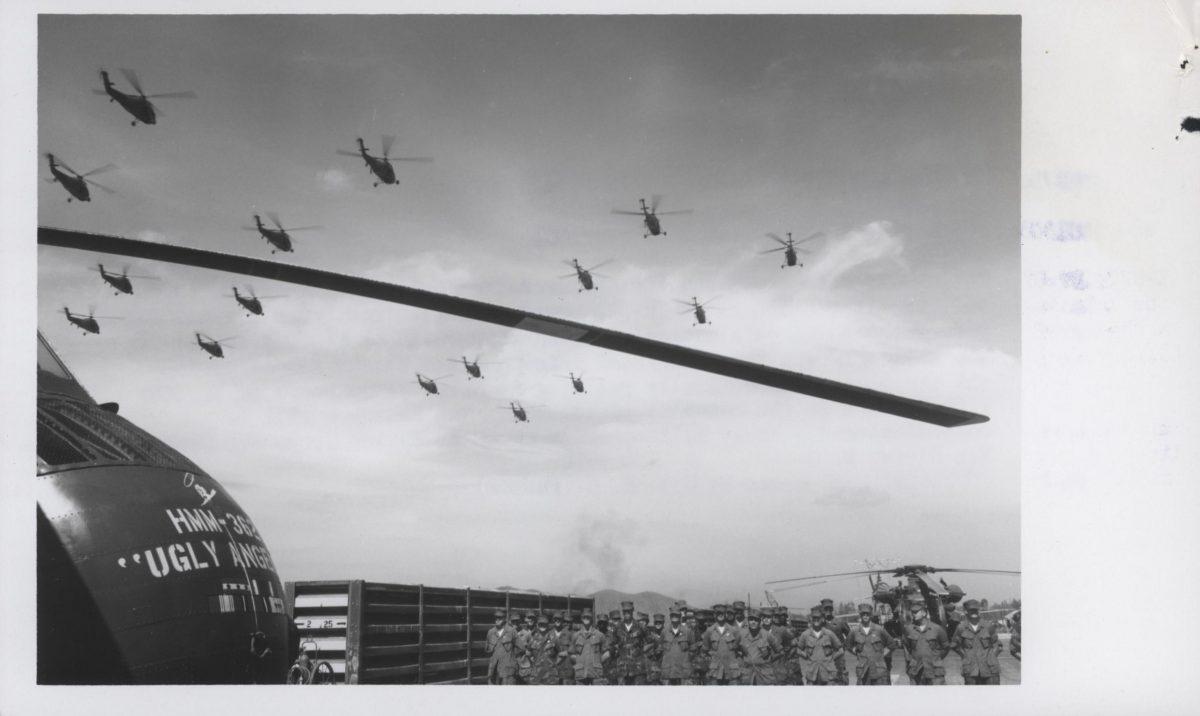
HMM-362 becomes first Marine Unit in Mekong Delta during Operation Shufly.
The Ugly Angels hold the proud distinction of having served as the first Marine aircraft unit in the Republic of Vietnam, going ashore on 15 April 1962 as Marine Helicopter Transport Squadron Light HMR (L) 362 with their Sikorsky UH-34s, arriving at Sóc Trăng in the Mekong Delta south of Saigon.[1] under the leadership of Lieutenant Colonel Archie Clapp. The task unit was called “Shufly” and its first operational employment involved lifting Vietnamese troops into battle on April 22.
MARINE CORPS RECOGNIZES APRIL AS MONTH OF THE MILITARY CHILD
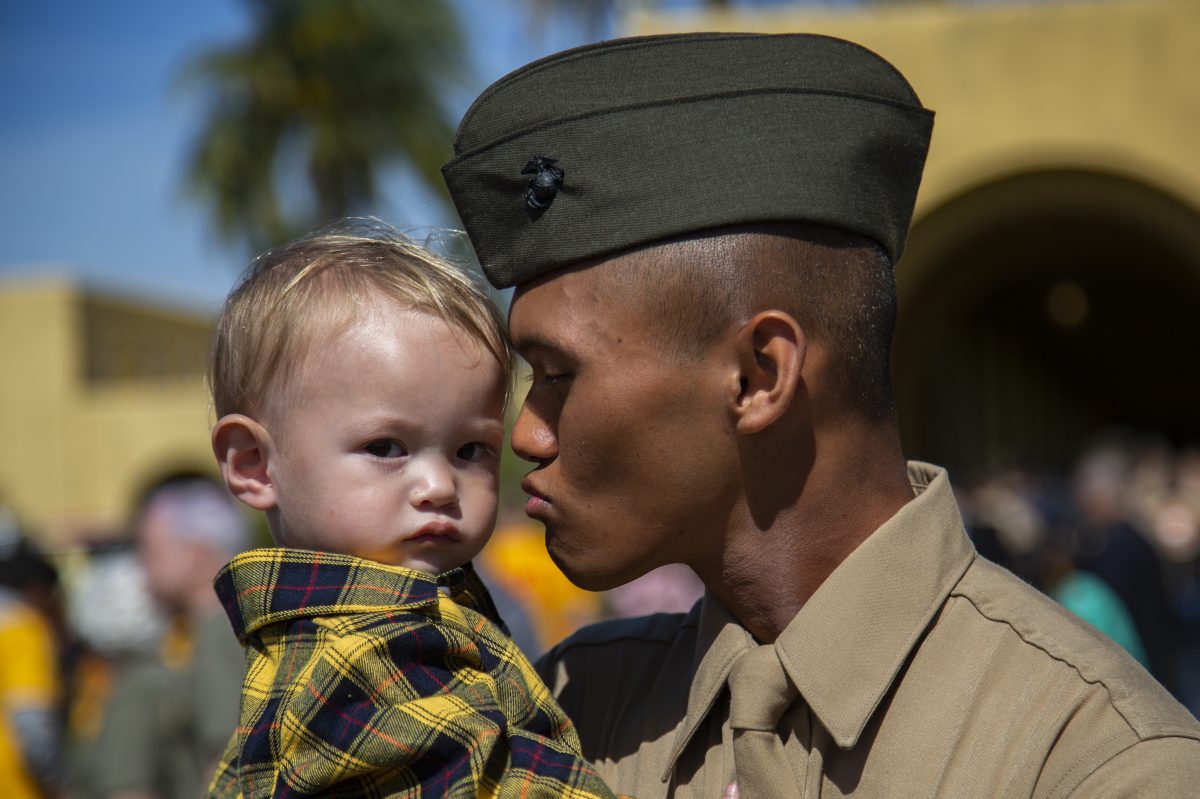
The Marine Corps joins the nation in dedicating the month of April as Month of the Military Child. The theme for 2020, “Stand up for Kids,” emphasizes the power of a safe, caring adult in the life of every child. According to the Department of Defense, there are approximately 118,000 Marine Corps children dependents.
MARINE OF THE WEEK: E-TOOL
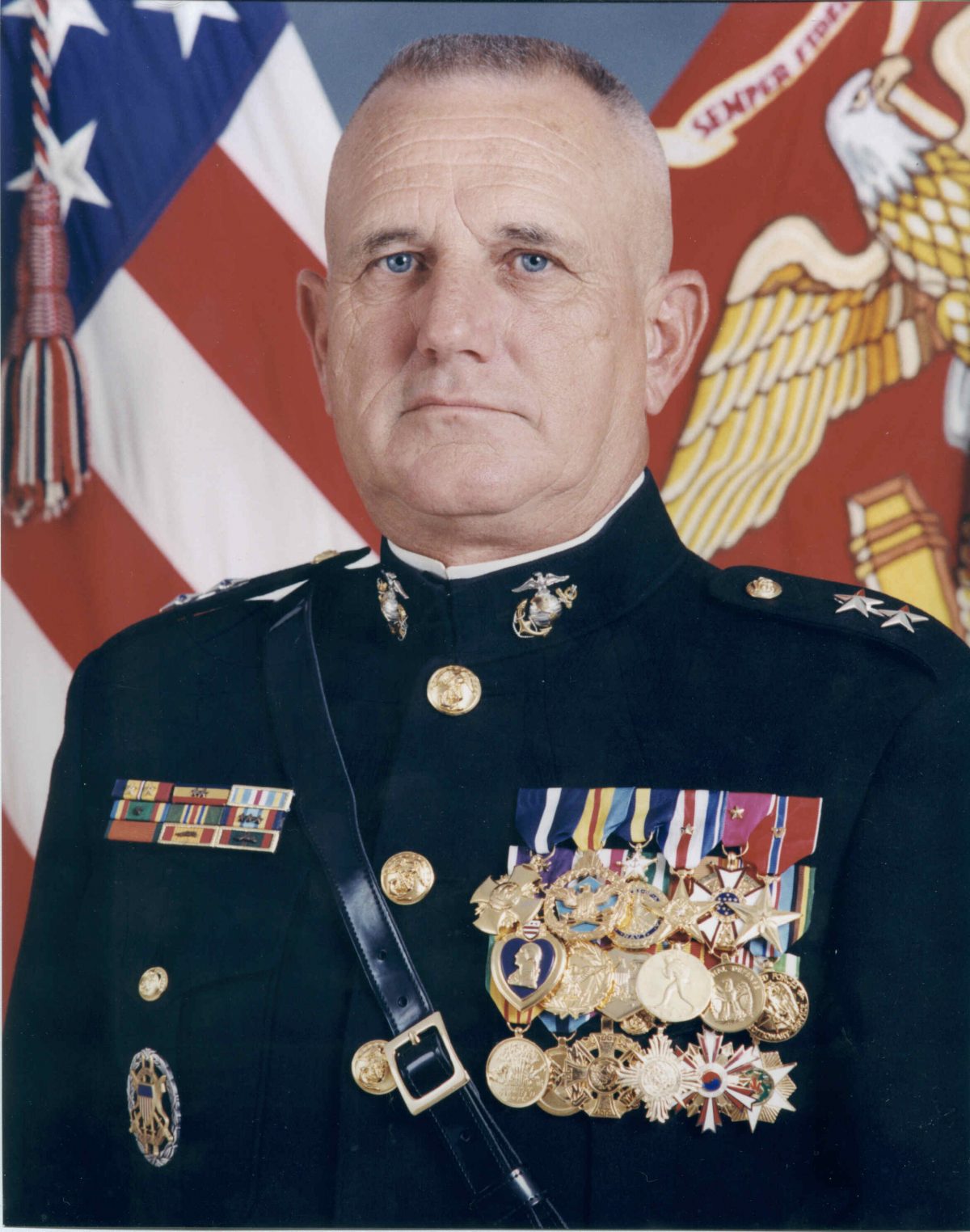
MARINE OF THE WEEK:
NICKNAME: E-TOOL
Maj. Gen. Ray L. Smith
Republic of Vietnam, April 1972
Award: Navy Cross
Smith, a Captain at the time, was serving as an advisor to approximately 250 Vietnamese Marines located on a small hilltop outpost in the Republic of Vietnam. Helping “repulse several savage enemy assaults, and subjected to a continuing hail of fire from an attacking force estimated to be of two-battalion strength, Capt. Smith repeatedly exposed himself to the heavy fire while directing friendly air support. When adverse weather conditions precluded further close air support, he attempted to lead the group, now reduced to only 28 Vietnamese Marines, to the safety of friendly lines. An enemy soldier opened fire upon the Marines at the precise moment that they had balked when encountering an outer defensive ring of barbed wire. Capt. Smith returned accurate fire, disposing of the attacker, and then threw himself backwards on top of the booby-trap-infested wire barrier. Swiftly, the remaining Marines moved over the crushed wire, stepping on Capt. Smith’s prostrate body, until all had passed safely through the barrier. Although suffering severe cuts and bruises, Capt. Smith succeeded in leading the Marines to the safety of friendly lines.” (U.S. Marine Corps photo)
1966
Had C Rats in March/ April 1966 at ITR . Ham and Lima Beans were good but don’t get behind the guy who had it! We called them ” Ham and MF ers”. Turkey and Noodles were good, but one forced march I got two meals of eggs and ham. It came with plain white bread. Tasted disgusting and no one wanted to trade. Twenty five miles on white bread! Semper Fi
A MARINE’S BEST FRIEND
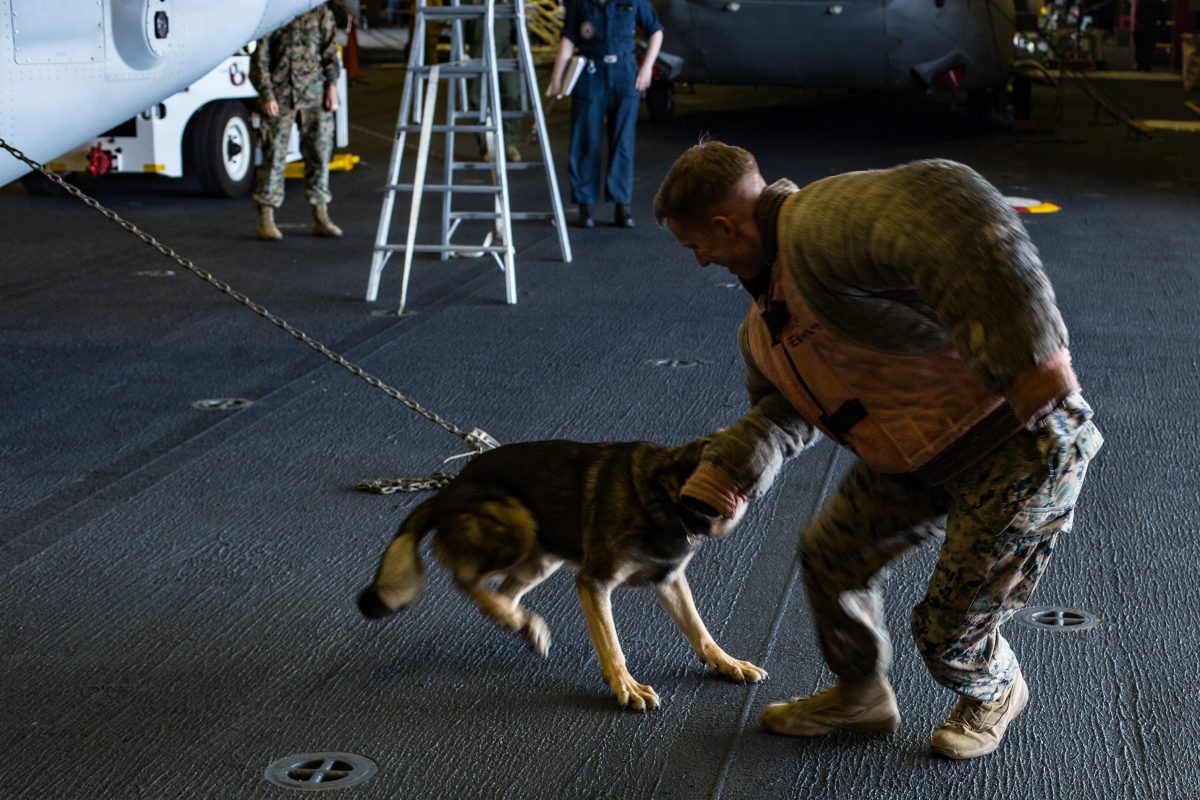
In 1918, the Marine Corps earned one of its many well-known nicknames at the battle of Belleau Wood. After a ferocious offensive, the Marines forced the Germans into a retreat. Marine Corps legend has it that in the wake of their withdrawal, one German soldier left a journal in which he described the Marines as “Teufelhunden”, meaning “devil dogs”.