During the cold war approximate 300,000 Marines participated in Atomic bomb exercises in Nevada and the South Pacific. Records show that several died early with complications from various forms of cancer under a cloud of uncertainty about those exercises causing the cancer through ionizing radiation that are being disputed to this day. The VA has been drastically improved from the time the studies were initiated and is starting to recognize that there is reason to believe that those exercises had a major part is causing some of the cancers. As more scientific proof is developed there should be more cases presently in the claims process that will be recognized more specifically, for or against granting compensation for a claim. Something like what DNA has done for our legal process.
Category: Marine Corps Stories
non vietnam vet
I enlisted in the Marines in Feb.,1966 while I was a senior. I entered boot camp July, 1966. Went to infantry training a Pendleton and then supply school at Camp Lejeune. When leaving school, we were given three choices. Over seas, west coast, east coast. I chose over seas because I thought being in the Corps for four years I would go to Viet Nam sometime I might as well get it over. When my orders came, they sent ten of us to MACS-2 at Kaneohe Hawaii. Next duty was C&E Bat. at San Diego. As such, I never refer to myself as a Viet Nam Vet. I just served during the war.
Desert Shield/Storm?
Seeing a lot of Vietnam vet posts. Haven’t seen any about 1990,91 Desert Shield/Storm commentaries. I was in 1st LAI Bn TOW plt. We got airlifted out on Labor Day weekend to Saudi Arabia. I suppose some of what I remember most are the exaggerations of the media. Like, I never drank 5 gal of water a day and after getting climatized I drank the same amount of water as I drank back at Pendleton. As far as actually busting caps, I never did, I was the guide and drove the platoon hummer wherever Capt. Freda wanted me to go. When we were sitting in Kuwait airport I found out that about 2/3 of the platoon never fired a shot either. And they were up with the forward units. I was with he supply train about 10 miles back. We sat in the middle of the burning oil wells for about 3 days before moving into the airport and then it ended. Just over a 96 timewise. I’ve only seen a couple of guys wearing Desert Storm covers since then and when I asked them where they were at or which units they were in it seemed like it was a big secret they couldn’t tell me anything. So if there are any Desert Shield/Storm vets out there with more interesting accounts to tell (and you’re not sworn to secrecy) go ahead and write in I would like to read them. And no, I’m not writing a book. R/S Sgt. Pete
Scariest Days
While sitting in group the other day someone ask this question. “What were your most scariest days in the service?” After spending 13 months as a gunner in an infantry unit you would think that i would have instantly thought of a day in Nam. I did have some bad days over there but, one thought that came to mind was my first day or two at P.I. I was totally “Scared Sh$%less” I could not take a crap for at least 3 days! I am curious on any other thoughts of your “Scariest Days” in the Corps. Keep in mind that I sit in group with a lot of Army guys and, when I responded it got a lot chuckles. They had no idea what I meant. Anyone else have a similar experience or, was it just me? Bill 0331
I Am A Marine
I Am A Marine
I was born 244 years ago in 1775
Not in a hospital nor a cabin, nor a home
I was born in a Tavern on the docks in Philly.
I was given the task of augmenting the United States Naval Forces in battling for the birth of my Country.
I took that charge and made it my own,
no other would take charge from me.
It is my honor-bound duty to stand for my country,
not for diplomacy, that is the job of others.
I like the Spartans before me, smile in the face of the enemies of my home.
I am the tip of the spear,
I do not wither from my charge,
I care not who you are or what you are capable of,
I am a United States Marine,
I will not falter,
I will not hesitate,
if you are an enemy of my country,
FEAR ME,
I am coming for you personally and
I will not quit until you are my enemy no more.
It is said to forgive is divine, that is God’s job, mine is to arrange your face to face with Him.
I am just a man, born to a woman, I bleed red, I have a purpose, my purpose is to protect my country from all enemies foreign and domestic,
I WILL NOT STOP,
Try to destroy my faith, my family, and my country, we will meet. When we do, remember this, I WILL WALK AWAY when it is done.
It is said What does not kill you strengthen you,
not true of a Marine,
a Marine will kill you.
That’s my job, that’s what I do.
MARINES PERFORM ‘ARDUOUS’ EVALUATION OF NEW GRENADE LAUNCHER
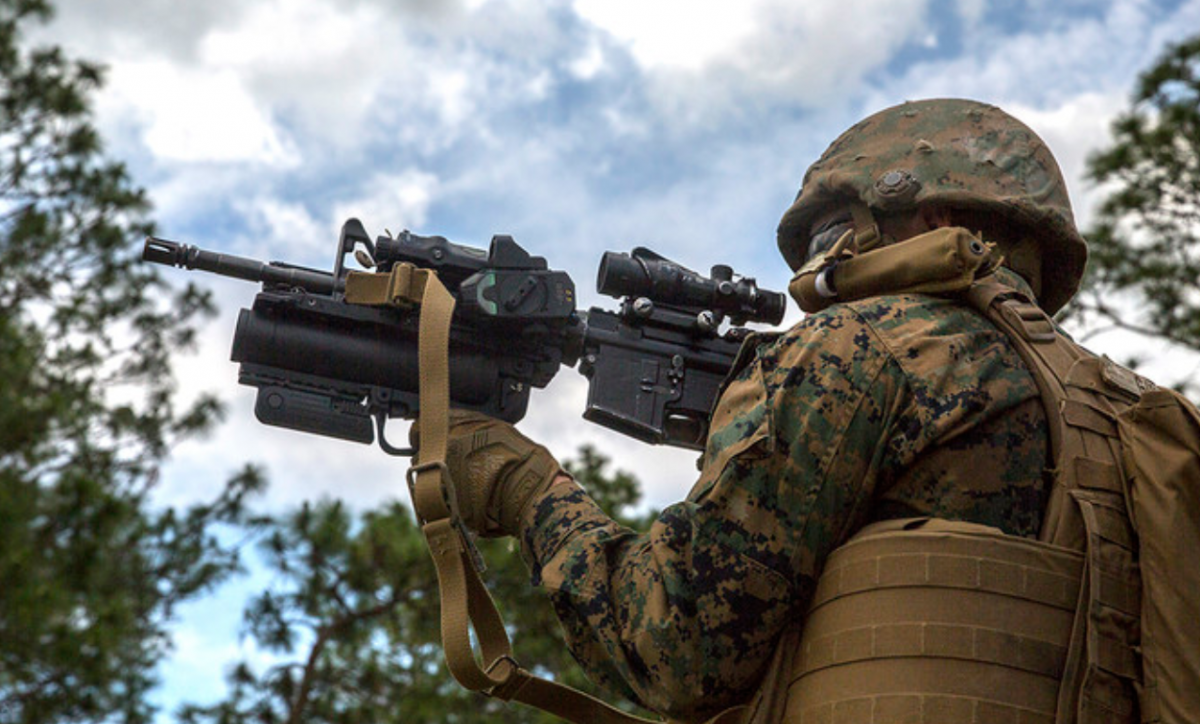
The Marine Corps plans to introduce a new weapon intended to enhance the lethality of infantry Marines on the battlefield.
The M320A1 is a grenade launcher that can be employed as a stand-alone weapon or mounted onto another, such as the M27 Infantry Automatic Rifle. Scheduled to be fielded in fiscal year 2020, the system will give fleet Marines the ability to engage with enemies near and far, day or night.
A DAY IN THE LIFE OF A MILITARY WORKING DOG
From detecting improvised explosive devices in Afghanistan to being on the front lines during World War I, military working dogs have been used to help service members win battles for generations. The same holds true today, as Cpl. Cody Hebert, military working dog handler, 2nd Law Enforcement Battalion and his military working dog, Ziggy, give us a look into their everyday lives.
“We start our daily duties when we come in every morning,” Hebert said. “Those duties include cleaning out the kennels and doing any tasks like preparing for any type of training that we might be doing that day.”
When it comes to training, there can be different variations that can influence the handlers and the dogs in order to become mission ready.
“Just like us, the dogs have training jackets for everything that they learn,” Herbert said. “This includes commands they know, training they have done, what they are good and bad at and even which handlers had them in the past.”
For a MWD handler, it is important to know the history of who and what the dog knows and how they are currently performing. Each handler creates a special bond with their dog to instill confidence in both the dog and themselves.
“When you and your dog deploy, there should be confidence in everything you do,” Herbert said. “If you’re on patrol with an explosive detector dog, not only do you have to trust to follow him, but the unit also has to be able to trust you and your dog because they are going to follow every step that you take.”
Training can take on different types of aspects between the dogs and their handlers. Training can involve doing an agility course to recreate real life situations, practicing commands for listening and direction and physical training to build strength and stamina.
“We have the opportunity to spend time with the dogs after hours almost anytime,” Hebert said. “We’re given the chance to build a bond and reward the dogs for all that they do. If we are willing to do that, the dogs are willing to work with us by listening to the commands while working for longer periods of time as well.”
The best way for the dogs to learn is to let them know that they are getting rewarded by either a ball or positivity and sometimes even belly rubs from their handlers.
“These dogs get taken care of like us,” Hebert said. “They get attention, exercise, training and medical care. As handlers, we’re trained to know the information just like how the dogs know what they are looking and listening for.”
A MWD’s average military career is eight years before it can retire.
“It just depends on the dog for when it retires,” Hebert said. “Most of the time they retire because of medical reasons. Going full speed and biting constantly puts a lot of strain on their bodies. Just like us, as the dogs get older their bodies aren’t able to do as much.”
Whenever a dog retires from the service, they have a chance to be adopted by their handlers.
Whether a MWD is spending time with its handler or training to protect Marines, they will always be rewarded for doing their job in every clime and place.
Green Side Squid
One week after finishing Field Medical Service School at CamPen, I was aboard APA 45 Henrico headed for RVN via Okinawa. I roomed with 3 other O-3s, one of who had red patches on the outside of the knees of his utilities. I mentioned at dinner that I would be open for sick call at 0800 the next morning. I arrived at the ships dental office and there was a line of troops down the passageway which really surprised me. My dental tech and I worked as quickly as we could to care for all the patients that day, most of whom had the same strange little squares on their utilities. At dinner that night, I casually asked the group if they knew what the little squares were for?? The Captain I had met who also had the little patches spoke up quickly and said “Hey Doc, didn’t they tell you that those are the guys with VD and you have to be REAL careful with them!!” My helpful and friendly dining companions all chimed in to confirm the need for special precautions when dealing with these contaminated Marines!! Of course I had to appear as un-squid like as possible, so I put on a grim face and said thanks. By this time the battalion surgeon was in on the scam and he advised me to show up at sick bay in morning for appropriate antibiotics. The next morning as I headed to sick bay, the XO met me in the passageway and said he’d heard on “my accidental expose”. It was kind of quiet when I went into to office considering the number of people in the room when Dr Tom said to drop my trou for the shots. As I got thing ready to drop, the Captain who also had the patches came in the room and yelled “Hey, Doc,turn around!” And there he was with the plywood insignia for SHORE PARTYand the room was filled with hysterical folks leaning on each other ……laughing the asses off!!! It’s just about impossible to do anything but realize that I’d been HAD by these screw balls. A great group of men with a fitting introduction to the Corps
What Is A Vietnam Vet
I have just recently discovered the Grit newsletter so I guess you can say I am kind of the “New Guy” I served 1 tour with Lima 3/1 never even thought of extending after being witness to some extendys getting wasted after coming back.In my opinion if I made it for one tour there was no way I was going to push my luck,considering the fact that there was really no good reason for us to be there.Thats not why I am writing. Over the years I have run into Vets wearing Vietnam Vet hats and other items claiming to be Nam vets but,when I approach them to find out where and when and who they served with some will tell me “Oh I didn’t actually go to Vietnam ” but,”I served during the war” Does that make him a Vietnam Vet? or the so called Vietnam Era Vet? With that said why does a person that did not leave the states during WW-2 considered a WW-2 Vet yet, if you served during any other period you are an “Era” vet. Sometimes I hesitate to ask someone about their service for fear of what they might say.One time I saw a guy with a 1st Mar. Div hat and was excited to speak with him. When I told I was with 1st Marines in 68 He just turned and walked away and said he was to busy to talk.I followed him and started asking him more questions he all he said was he was “Around Da Nang” “Who with!” I ask. no answer and he just kept walking away. I later saw him inside the store without the hat on he pretended like he did not see me but I just had to ask. “You are a fake aren’t you?” No answer. I just walked away and let it go. My anger management group therapy helped in that situation. A few years prior the Cops would have to be called. Thanks for letting me vent Marines Paul 0311 68-69
MARINE CORPS BASE CAMP PENDLETON HOSTS THE ANNUAL ENVIRONMENTAL LAW TRAINING SYMPOSIUM
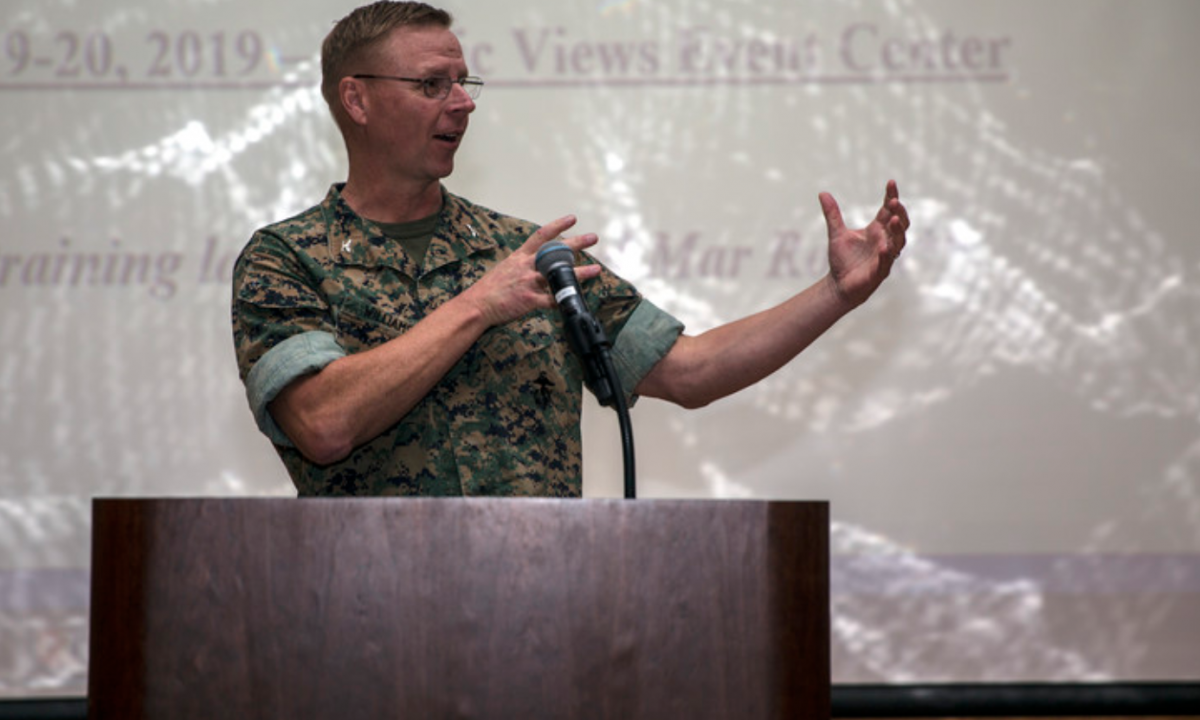
Marine Corps Base (MCB) Camp Pendleton hosted the Environmental Law Training Symposium at the Pacific Views Event Center aboard MCB Camp Pendleton, California, on March 19, 2018.
The annual symposium is conducted every year with MCI-West MCB Camp Pendleton to provide training on updates in laws about environmental and land use, which include new regulations and policies. MCI-West MCB Camp Pendleton’s’ Environmental Security programs implement installation restoration initiatives that sustain the current compliance of operational environments and ranges.