It has been forty years since I was at DaNang MAG-11, VMAAW-242. The day I will always remember is the day a ton of sh!t flowed thru the compound. Some rocket scientist decided to empty three years worth of sh!t from the latrine. A detail was selected to efficiently get the job done. Arrangements were made to load the stuff on a truck and dump it in the dump. When the container containing the excrement was lifted up to the truck, it tipped over; and like lava from a volcano, the sh!t poured into the compound. I was about 50 feet from the area. I saw it swiftly flowing toward me. I jumped on top of a bunker just in time to avoid getting slimed. The stuff claimed casualties when a couple of jarheads on the detail got a ton of sh!t dumped on them when it fell off the truck. They earned their reputation that day of being real sh!t-heads. Ha Ha..The stuff smelled up the compound and the smell traveled about a mile down wind. Senior officers came to find out what happened. I don’t know if a report was filed, but I know they were p!ssed. I had to wear my gas mask for a week the smell was so putrid. NO SH!T!! If anyone from MAG-11 recalls this incident, please reply to SgtGrit with your comments. Thank You and I love you all, No Sh!t.
Category: Marine Corps Stories
September the 8th, 1967
Mark drove 3 1/2 hours to visit me when I returned on a visit from Australia to visit my daughters in Indiana this past month…I was with Mark when he was wounded in Vietnam, and I myself was Medevaced out an hour latter the same day… September the 8th, 1967..we both spend approximately 6 months in various hospitals recovering from wounds sustained on that day…we haven’t seen each other in 41 years..our reunion began a year ago by email when I saw Marks’s picture on the Sgt. Grit web site…words can not describe how happy we were to see each other, and how proud we both are to have served together in Suicide Charley, 1st Battalion, 7th Marines, 1st Marine Division…Republic of Vietnam! No one on this planet can appreciate the camaraderie, brotherhood, and the bonds of war that Mark and I will share together for the rest of our lives on that special day! thanks to Sgt.Grit, and sucidecharley.com for sharing our story.
SUICIDE PREVENTION | ELIMINATING THE STIGMA
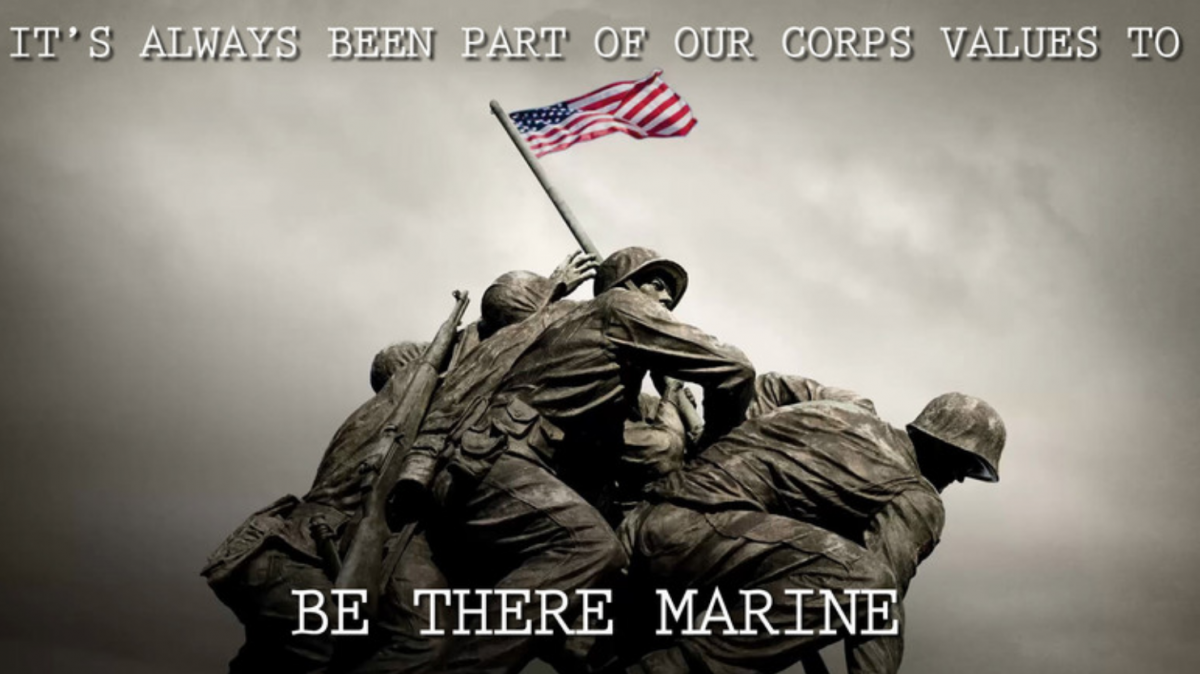
Behavioral health specialists report depression and suicide ideation rates increase during the holiday season and into the post-holiday period in the Marine Corps, according to the Headquarters Marine Corps Force Preservation Directorate. Marines may feel lonelier during these times as a result of being away from their families and supporters, said Shannon Hutchinson, the 3rd Marine Division behavioral health specialist. Marines then question their belonging and wonder if people would care if they weren’t around.
SOUSA SEASON OPENER: AFTER THE ARMISTICE
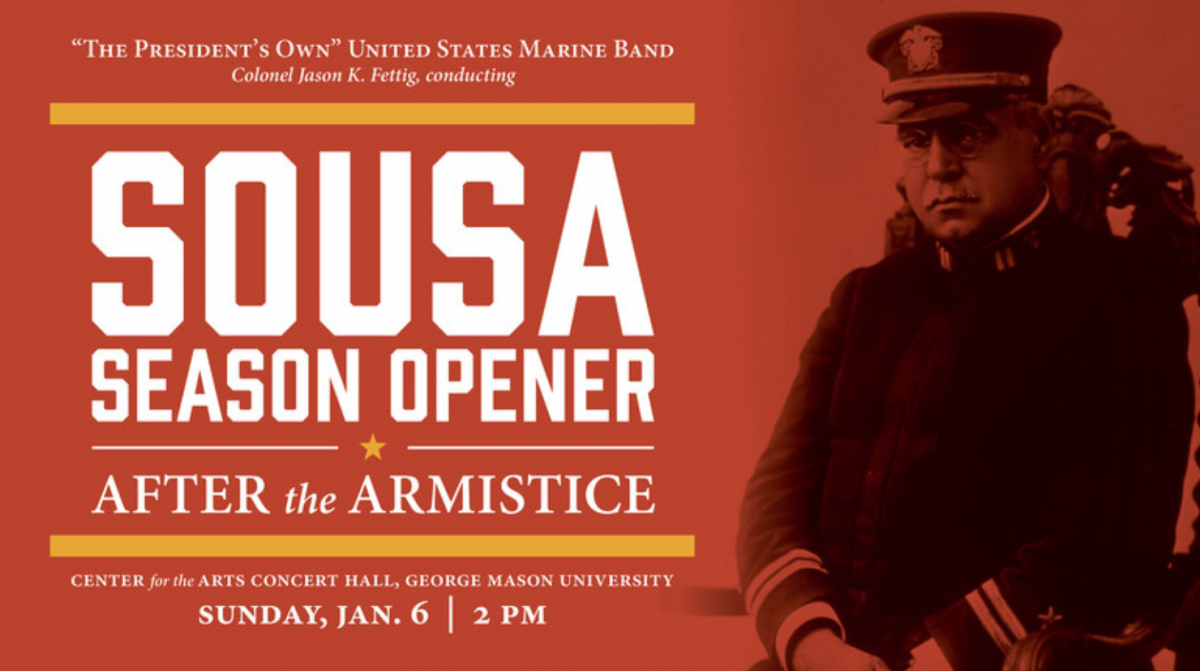
In a tradition that dates back 15 years, the Marine Band will open its 2019 Concert Season with a John Philip Sousa style concert focusing on the years after World War I and the Sousa Band’s first tours after the Armistice. The concert, conducted by Director Colonel Jason K. Fettig, will take place at 2 p.m., Sunday, Jan. 6 at George Mason University’s Center for the Arts Concert Hall in Fairfax, Va. The performance will also stream live on the Marine Band’s website and YouTube channel: youtube.com/usmarineband.
What I Did At Summer Camp
Actually, I started boot camp in mid-september, but it was still so hot during the day at Parris Island, South Carolina ,that black flags flew for several days during the first few weeks there. Black Flag Days were designed to eliminate strenuous physical activities due to the high loss of recruits who would be overcome by heat exhaustion. The Drill Instructors side-stepped this handily. Faced with the herculean task of crammimg beaucoup hours worth of training into an 18 hour day, they simply continued the prescribed curriculum indoors or in some “out of the way” locale. Once you realized that these Drill Instructors were pushing you to the limit so that your chances of survival would be greater in actual combat, their methods began to make sense and, in fact, contained profound wisdom as well as a GREAT deal of humor. Each of us has a funny story or two from boot camp. I’ve been told I should share this one with all of you. There are three phases to Marine Corps boot camp. In Phase 1, they try to kill you, or at least it seems that way. You discover to your amazement that there are a myriad of rules and procedures that MUST be followed at all times. The hard part is that the rules are made known to the platoon one at a time as each is broken by an unsuspecting recruit. (Ask a former Marine what happened the first time someone called his rifle a “gun”.) Thusly, one learns how things are accomplished “The Marine Corps Way”. No recruit may speak to ANYONE without permission. No personal pronouns may be used when speaking, e.g. ” I “, “me”, “my”, “you”, etc. No one may laugh or even smile. (When we were photographed in our half-set of dress blues [the kind they bury you in, we were told] “If you so much as grin, I will break your skull!) Phase 1 lasted the longest of the three, or perhaps it just seemed to. Phase 2 consisted of two weeks at the rifle range followed by one week of “Mess and Maintenance”. Week one was “grass week” where each recruit learned the proper positions for firing an M-14. The essence of these seven days became individual studies on how long the human arm could function without circulation and still survive. Week two was live-fire week ending with qualification day. I fired Sharpshooter on “Qual Day” because I liked the medal. (No Bull) It was a Maltese or Surfer’s Cross with a Marine Corps emblem in its center and was, by far, the best looking medal of the three. Week three found us working in the chow hall somewhere scrubbing pots or peeling spuds. Three other recruits and I were sent to the Close Combat Course where we cleaned, painted, raked gravel, and one afternoon hand-rubbed linseed oil into the stocks of brand-new deactivated M-1 Garand rifles. (They were to be used during swimming qualification as “necklaces”.) The “SWISH” of the tomahawk startled us all but especially the recruit whose head it barely missed as it embedded itself in a nearby oak. “DAMN! I MISSED!” came the retort from the Close Combat Instructor. The recruit nearly fainted. Phase 3 was testing and “war games” in the field. Recruits were allowed to blouse their trousers and retain some hair on the very top of their heads (a “high and tight”). We began to feel “salty” and entertained the thoughts that we might actually make it to graduation. Some of us were wrong but that isn’t why I’m telling you all this. In the field at Parris Island you were taught many things, One of the most memorable experiences was the Day Infiltration Course. You had to crawl under barbed and concertina wire from point A to point B. As combat Marine recruits, we were burdened with 782 gear, pack, rifle, bayonet, and helmet. While you attempted to negotiate this course, an M-60 fired over your head, blocks of C-4 were detonated in sand bagged craters nearby, and Drill Instructors threw sulfur grenades at you to make you “HURRY UP!” All in all, it was a great way to spend an afternoon. When it was Indian Company’s turn, all four platoons in the series were seated in formation and prepared for instruction on the situation facing us. The instructor for the course, a gunnery sargeant with a thick New Jersey accent, took the platform and briefed us on this obstacle and what we were about to learn from it. “Dee traynin’ tuhday is about a classic Muhreen Cohr tactic…a fruntal assauhlt in dee face uv hostyle enumee fiyah”, he began. He went on to explain,among other things, that staying low to the ground was the key to survival. You did this by low crawling toward the enemy while consciously digging a furrow with your helmet. The reason for this was that the enemy fire would glance off the left or right of one’s helmet and although possibly injuring an arm or leg, one could continue the assault. “Ahr dayer any questions?” he asked at the conclusion of his lecture. One recruit raised his hand. “SPEAK!”, commanded the Instructor. “Sir, the private understands the frontal assault and how enemy bullets can glance off of the side of the private’s helmet, but what happens if a bullet strikes the private’s helmet in the center?” The instructor momentarily looked perplexed. It was obvious that NO ONE had ever asked this question before. In the time it took for the gunnery sargeant to spread his feet apart and place his hands on his hips, he had his thoughtful reply. “For our poipuhsez heah tuday, we will not be interested in doz bullets wit yohr name written upon dem. We ahr interested only in doz bullets dat ahr mahkt “to whom it may cunsoyn!”
ISLAND MARAUDER DEMO PUTS NEW TECHNOLOGY TO THE TEST WITH 3RD MARINES
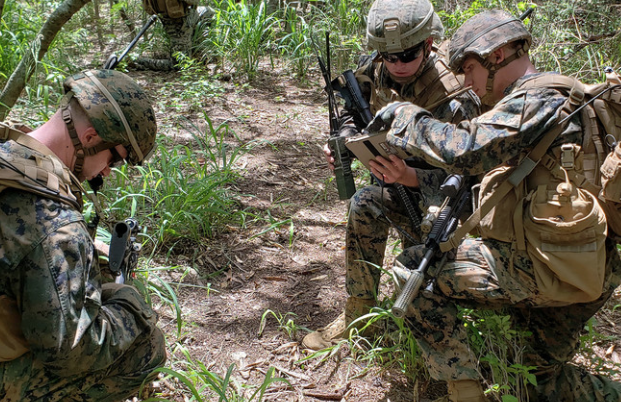
For the last three years, engineers and project officers from Marine Corps Systems Command have descended on the island of Oahu to put new technology to the test.
In the fall, MCSC—along with Marines from the 3rd Marine Regiment and partner organizations from the requirements community—conducted the “Island Marauder” technology demonstration to integrate and evaluate emerging technologies with existing Marine Corps gear to help inform future capability decisions for the Corps.
Managed To Smuggle
RE: Operation STEEL PIKE – shipped out of Charleston, SC on board the APA Geiger with MACS-6 in 1963. First day out we hit one h&ll of a storm. First lesson learned – always be the 1st person along the rail and never downwind when launching your guts. Below decks we were gathered around a GI can looking like a bunch of toy birds bobbing up and down into a water glass except we were filling the can, not emptying it.
DI Motivation and Inspiration
We all have something our DI’s said to us or made us do. Something that inspires and motivates us to this day. Send me your example.
Semper Fi
Sgt Grit
Sgt Grit wants to hear from you! Leave your comments below or Submit your own Story !
From Polio To 1st Lt
In early June, 1941 I had me tonsils nearly rupture and I had to have emergency surgery. Ten days later I was back at the hospital with paralytic polio (it was the wrong time of the year.) By 1942 I was totally paralyzed and the doctor told my mother I would more than likely die soon.
And I’d Been His
I served in Vietnam as a helicopter machine gunner and a proud member of HMM-262 (66/67). I received a purple heart for my efforts. When I returned from Vietnam, I had the feeling that as an air wing Marine, I hadn’t done as much as the grunts who walked through the jungles, slept in the rain, etc. I finally worked with a grunt who was in Vietnam at the same time I was there. We became good friends and I confided in him one day that I somehow felt like I should have done more because I didn’t have the combat experiences he had. He looked at me for a minute and then told me that he’d always felt the same way about me. He said that he felt lucky being on the ground and that his heroes were the guys who flew in the helicopters to bring in supplies, reinforcements or to carry wounded Marines out during firefights. He said he’d never be able to do my job. He’d been my “real Marine” and I’d been his.