I grew up as a Marine. My late grandpa, a retired MSgt, always shared with me and my siblings the places, stories and lore of the Corps throughout his service in WWII, Korea and Viet Nam. He was a bad-ass, not-so-lean, but green and mean 5’6″ Marine. He was as old school as they get. He went to PI back when they ferried recruits in. My father, a retired Gunny, served twice in Viet Nam in 1st Marine Division. While he did go to boot camp at San Diego, he served two tours as a DI and Senior DI at Parris Island. My family bounced around the country quite a bit over his 20+ years in the Corps, but our time at PI constituted some of my most formative years. It was kind of strange now that I look back at it, knowing dad as the loving, kind and wise soul of a father but also witnessing him as the hard-as-nails, in your face, barking bad ass DI that humbles everyone. All of those memories served me well when I went through PI at the tender young age of 17. When I got my ass chewed, I knew it wasn’t personal. That DI in my face was yelling at a tree like he did in DI school (yes, I’ve seen that too). But I knew that DI still instilled the fear of God and Chesty Puller into my soul. He was doing his job to make me a Marine. My brother and I both proudly made it through Parris Island. I even came out with a meritorious PFC. I almost made it through without any of my DI’s knowing of my family history, but was found out the week before graduation. One of my DI’s saw a plaque in A Company HQ with my father’s name. It’s an unusual name so he connected the dots, and that was all it took to make my last week there a living hell. Well, on grad day after the ceremony, it was the coolest thing in life to see my DI’s and Senior DI lock it up and present themselves to my father and grandpa, who both came in their dress blues, adorned with their chests full of medal. That was my second-best memory at Parris Island back in ‘81. But my absolute best memory of Parris Island came years later, when my oldest son graduated in ’09. Seeing him out front as a PFC squad leader on the parade deck, knowing that he was carrying on the family tradition (the family business, as he refers to it) was absolutely awesome. He went on to serve in Afghanistan. He returned a hero and is now retired. Every time I go back to PI, I walk away with an even keener sense of what my family’s history is and what I hope it continues to be. We are Marines.
Radio repair in combat
My time was 1959-1963. I was a 2771 (Ground Radio repair) and always worked “In the rear with the gear”. I’m really curious if any other 2771 people ever got into a combat situation. If so, were you expected to fix radios or just fit in with the grunts? Did you spend time out in the bush? If you were expected to fix radios, what kind of repair gear did you have with you? One of the reasons I ask is during the Cuban crisis we were shown a photo of the beach where would land and I remember I was assigned the 4th wave in. At the time I think I was temporarily assigned to 2/8. Ever since I have always wondered what my duties would have been once we hit the beach.
Charms

Does anyone really know why we weren’t aloud to eat the charms from what seemed like decades old MRE’s in boot camp? I vividly remember a night in boot camp on Camp Pendleton. We had just given our nightly report and were in our shelter halves. My good friend and I started enjoying our evening ritual of crCking open a few pieces of charms candy when to our surprise the shelter half was ripped open by the meanest drill instructor to roam the earth. We got yelled at for about 15 minutes straight then he left. We innocently thought that was the end of it but as soon as day-light cracked over the mountains the whole platoon was marching up and down Mt. Mother until we couldn’t stand. I didn’t eat another charm in boot camp and had real reservation when I got to the fleet.
MARINE OF THE WEEK:
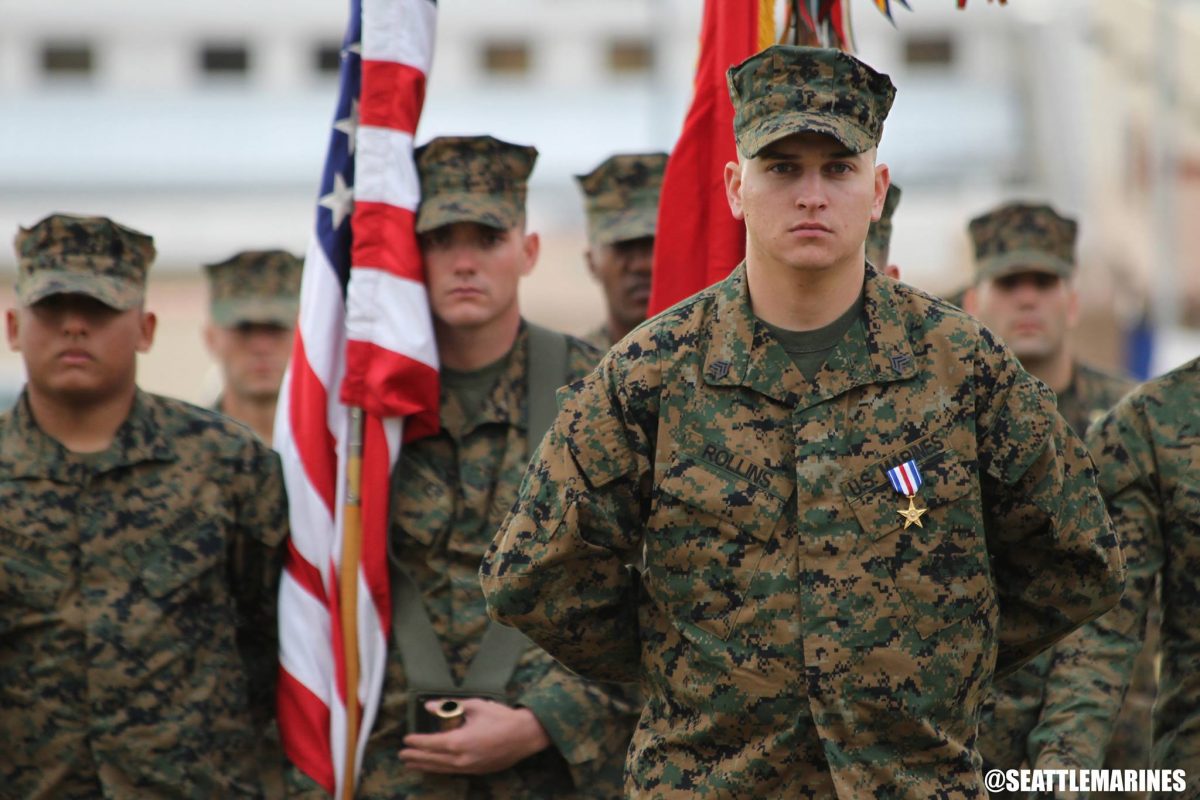
Sgt. William W. Rollins
2d Battalion, 7th Marines – HAVOC, Marine Corps Forces, Central Command
Balkh Province, Afghanistan
June 19, 2008
Award: Silver Star
Enemy fighters ambushed Sergeant Rollins’ squad with a high volume of machine gun and rocket propelled grenade fire from multiple prepared positions. With the majority of his squad pinned down by the accurate enemy fires, Sergeant Rollins rushed to within 30 meters of the enemy positions, in the face of almost certain death, and provided suppressive fire which allowed his men to escape the immediate ambush area. Once his Marines withdrew, Sergeant Rollins courageously maneuvered through enemy fire to rejoin his squad where he continued to attack the enemy while the wounded Marines were extracted. Then, with enemy fire still impacting around him, Sergeant Rollins dragged a Marine casualty to safety. Sergeant Rollins aggressive actions in the face of the enemy drew fire onto his own position and provided his squad the reprieve they needed to maneuver to safety. Sergeant Rollins bold leadership, wise judgment, and complete dedication to duty, reflected great credit upon him and were in keeping with the highest traditions of the Marine Corps and the United States Naval Service.
(Photo by Lance Cpl. Sarah Anderson)
Iwo Jima and Beyond
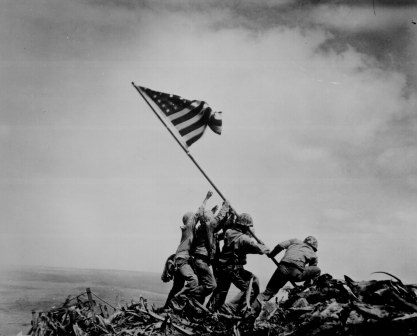
I have not written a story to be posted here before, but after reading the latest post about Iwo Jima, I feel compelled to I also have a couple of Marine related questions I can’t find answers to. I am gladly attaching my e-mail, so if anyone can help me-Please Do. I served in The United States Marine Corps from 1966-1970. There is no such thing as a former Marine-I am temporarily unassigned. I was in Vietnam from September of 1967 to October of 1968. I was stationed on Hill 55, a radio man with the 7th Marine Regiment, 1st Marie Division. Our regimental Colonel was Col. Reverdy Hall, our regimental Sgt. Major was “Iron” Mike Mervosh.. Right before I retired, I was a bartender at The Marine’s Memorial Club and Hotel, San Francisco, California.
DI abuse at San Diego
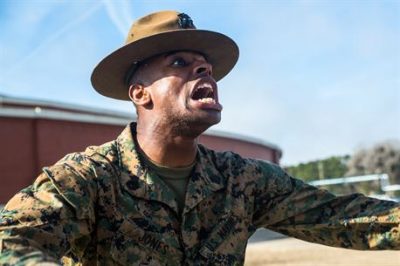
I went through boot camp in 1962, just after the PURGE at PI, and experienced and witnessed abuse almost daily. The first time was when a recruit, the DIs called a porker, was striped to the pull-up bar with web belts and left hanging there, it seemed like a half an hour. The second was more personal. I was under 18 when I went to boot and my birthday came up at the rife range. The senior drill instructor called me to the duty tent. When I reported there he said he had a birthday present for me. His and the two other DIs give me three slugs in the goodie locker.
SPITSHINED BOOTS WERE PRIZED
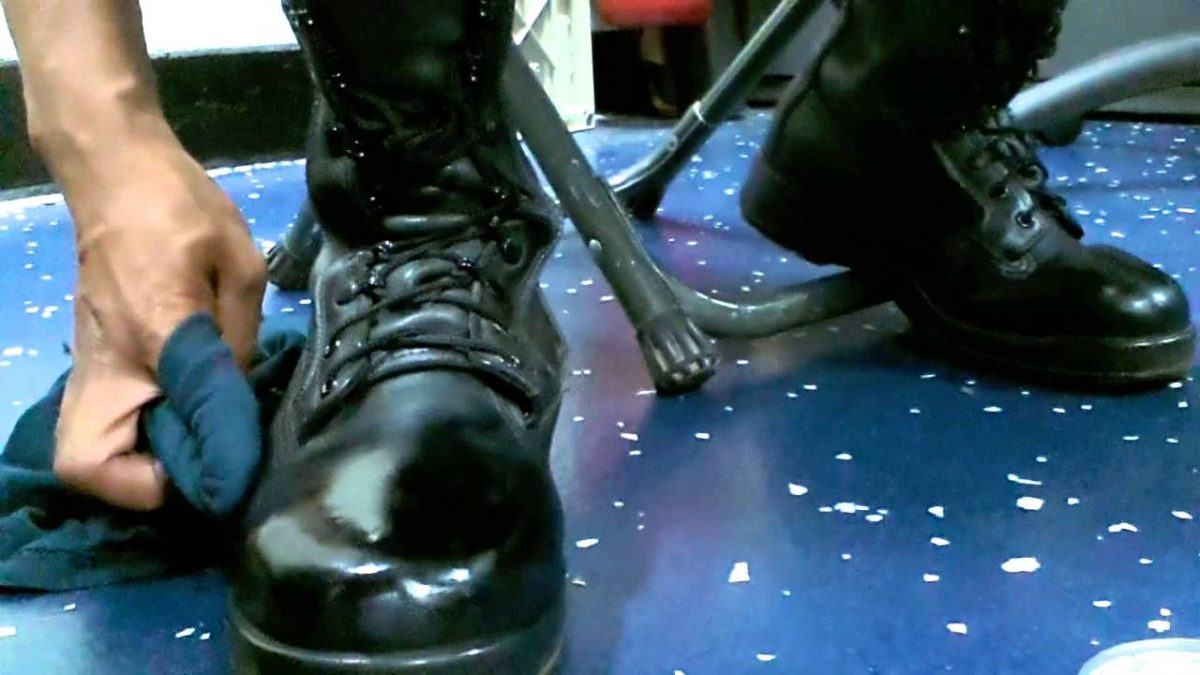
The combat boots pictured on your “Salty old Marine” tee shirt reminds me of my experience with an Army Surgeon, a full bird colonel.
In 1958 the Corps was issuing recruits 2 pairs of boots for field wear – the venerable “boondocker” low cut boot (just above the ankle), and the full combat boot. Both were made of rough, unfinished leather because (it was said) they “breathed better” on the feet. Regardless of design purpose, this was not acceptable –unofficially I’m sure – to the Corps. Our DIs immediately informed us that these boots would be worked on until they could carry a spit-shine like a patent leather shoe! And we did. And after weeks of labor – using shoe polish which we melted into the leather with matches or lighters, smooth, rounded bottles to press the polish and leather firmly down and smooth, and elbow grease by the hour – we lovingly produced a shine you could shave by. Those boots were worn at every inspection held in utilities for the next four years.
Advance the story a little over 2 years. Wearing my prized combat boots, I had boarded the APA USS Navarro in a harbor on Okinawa at the very beginning of the largest exercise by the Corps to that day – Operation Blue Star – and the battalion was still loading. By a freak accident I was knocked into an open hatch on the mess deck and fell a couple of decks to the hold, landing in a sitting position, feet hitting first, then butt and slamming backward to bounce my head off the steel. As a side note, I vividly remember the actual fall and had no fear – just an overwhelming anger telling myself what a dumbass I must be to be in that situation. It didn’t knock me out but did knock every ounce of air out of my lungs. The corpsmen, not knowing how severely I might be injured, got me on a stretcher and I was raised by rope to the deck, put on a motor launch and rushed ashore to be taken to the emergency room at the Army hospital. I was conscious the whole time but obviously in a little shock.
Great care had been taken to try to not move my spine for fear it was shattered and might kill me. They got me on a table in the emergency room and a minute or two later the head surgeon of the hospital arrived to check me out. The first thing he told the nurses, male and female, was to cut my clothes off so there would be no reason to move me unnecessarily. No problem. I could buy another set of utilities and skivvies. But when the guy with the scissors moved to my feet I spoke up. “Don’t cut my boots.”
He stopped and looked at the Doc who snapped “Cut ‘em off.”
Again, the guy goes for my boot and I said, a little irritated, “I said, don’t cut my boots!”
The Doc is now agitated that his order is being contradicted by an E-3, f**king 19 year old Marine. “You cannot be moved until I can examine you to see if your back is broken!” and to the nurse “Now cut the damned boots off!”
The guy goes for the boot. I start trying to sit up and, in a very loud, disrespectful tone, “I said don’t cut my f**king boots!”
The Doc, afraid he’s about to lose a patient says “Okay! Okay!” and I relax as he tells the nurse “Just cut the damned laces and see if you can ease them off without killing him.” He turns to the others and, shrugging his shoulders like “What can I do?!!” he mutters “F**king Marines”. He was one highly pissed bird colonel but I still had my prized boots.
L/Cpl out of boot camp
I spent the summer of 1965 in boot camp at MCRD Parris Island at the ripe old age of 17, straight out of high school. If you left PI or ITR as a Pfc you did a lot of things right. If you made L/Cpl, I certainly never heard about it. Sounds like bullshit to me. Rank was quick then for the right people but E-3 your first what, 6 months? I don’t think so. And for the 60 lbs. (or whatever) of “muscle” out of boot! Man, I thought people had to see me before they would think I was that stupid. Save it for your 50th class reunion. Maybe by then people will forget the truth and buy it. Semper Fi but save the bullshit for the boyscouts.
MARINE OF THE WEEK: Gunnery Sgt. Juan J. Rodriguez-Chavez
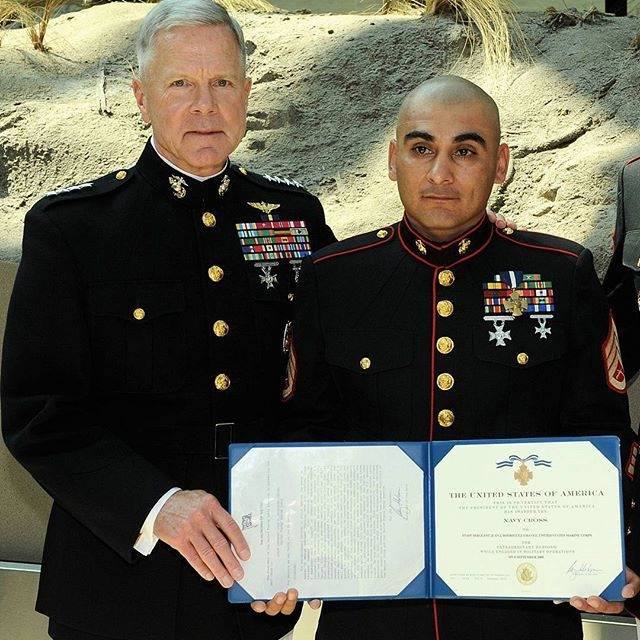
Assigned to the security element while other members of his team led two platoons of Afghan National Security Forces into Ganjgal Village for a pre-dawn meeting with village elders. Then-Staff Sergeant Rodriguez-Chavez heard over the radio that the dismounted patrol was ambushed by roughly fifty enemy fighters in fortified positions. With four members of his team in immediate danger of being surrounded, he drove a gun-truck, with one other Marine as his gunner, forward into the kill zone of a well prepared ambush. With only the machine gun fires of his gunner to suppress the enemy, he ignored heavy enemy fires and drove the vehicle into the kill zone three times to cover the withdrawal of the combined force and evacuate two dozen members of the Afghan National Security Forces. With complete disregard for his own personal safety, he made a fourth trip into the deepest point of the kill zone in another gun-truck with three other U.S. personnel to recover the bodies of the fallen team members. He positioned his vehicle to shield the U.S. members from the intense enemy fire as they dismounted to recover their bodies. By his decisive actions, bold initiative, and selfless dedication to duty, Staff Sergeant Rodriguez-Chavez reflected great credit upon himself and the Marine Corps and upheld the highest traditions of the United States Naval Service.
MARINE CORPS AIRCRAFT CRASHES, KILLING 16
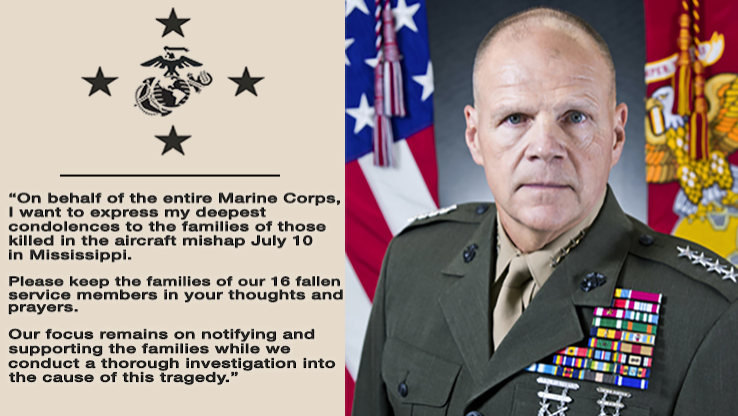
The Marine aircraft that crashed Monday evening was a KC-130T from Marine Aerial Refueling and Transport Squadron (VMGR) 452, Marine Air Group-49, 4th Marine Aircraft Wing, Marine Forces Reserve. The flight originated from Marine Corps Air Station Cherry Point, N.C., as the squadron was supporting a requirement to transport personnel and equipment from there to Naval Air Field El Centro, Calif.