We arrived at the San Diego airport at 2AM, three days late, leaving Houston after a hurricane. Everyone was herded off onto “cattle cars”. While standing on the “yellow foot prints”, a couple of guys in the back row were whimpering like someone who had just got a spanking from an angry Mother. When questioned by the DI, using a lot of colorful descriptives, “What do you mean you’re not supposed to be here?” one of them said, “We joined the Navy!” Naturally, we all were “invited” to do 50 push-ups for laughing. Our next experience was a not-so-professional haircut by the DIs, because there were no barbers there that early. The only thing I can say different about being a “Hollywood Marine,” is that we didn’t have “sand fleas”. MSgt (Ret)
Old radio equipment
I joined the USMC in 1961 and after leaving boot camp I was assigned to “H” Battery 3/10 as a cannoneer. I loved the job but in 1963 I went to NGF School at Little Creek Va. Then transferred to HQ BTRY I was assigned to the NGF section and went on a CPX and sat with a PRC-10 and never talked with anyone. Transferred to 1st ANGLICO in Hawaii it took me over a year to pass our Comm test for promotion to Corporal. We had to set up and operate all kinds of radio and wire equipment I did fine with high powered gear like the AN/Mrc 83 and 87 but A Comm SGT named Burton failed me a couple times on tuning a PRC-10, As I got salty and knew my gear we would trained using Morse Code . A 2533 RTO would transmit corrections to our ship in code, I was not required to know how to send or receive in code and I always wondered if the 2533 sent in his own corrections. A lot of guys in TACP teams had holes in the back of their utilities by battery acid from the battery of their MAY or MAW( UHF radio) an other thing Wire folks worked their butts off running wire comm while the rest of us slept.
Comm Equipment Used In The Corps
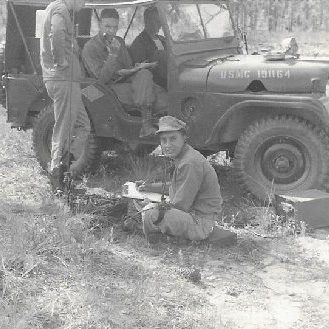
Today, this 79 year old Marine was reminiscing about the old days and wondering what type of communication equipment the Marine Corps uses now days, its got to be high tech. In the mid-fifties we used field radio equipment like the AN/PRC-8, 9’s and 10’s and the AN/GRC-9 which used a hand cranked generator for power to transmit. Cranking that thing was fun, not. We even had the AN/PRC-6 (walkie-talkie) in our inventory but don’t remember using it. For mobile comm we had the MRC-6, the MRC-38 and other vehicles depending if you ere infantry, artillery or armor. For the old timers I stand to be corrected.
Fear Of Marines
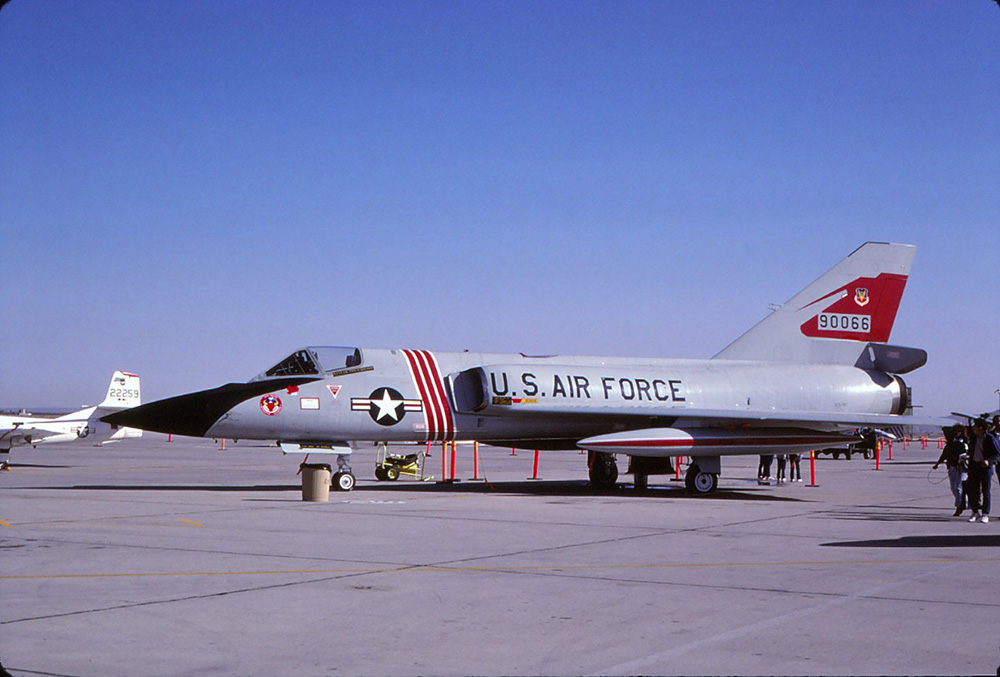
A squadron of these babies appeared on our C-130 flight line in Cherry Point the day after Kennedy was killed. Ready for war with Cuba or Russia. Every Air Force crew chief had a full, brand new tool box whereas us poor Marines were lucky to steal (or rather com-shaw) a screw driver here or there. Needless to say the fly boys had a 24 hour guard on their planes for fear of Marines, not commies.
HONOR:
HONOR:
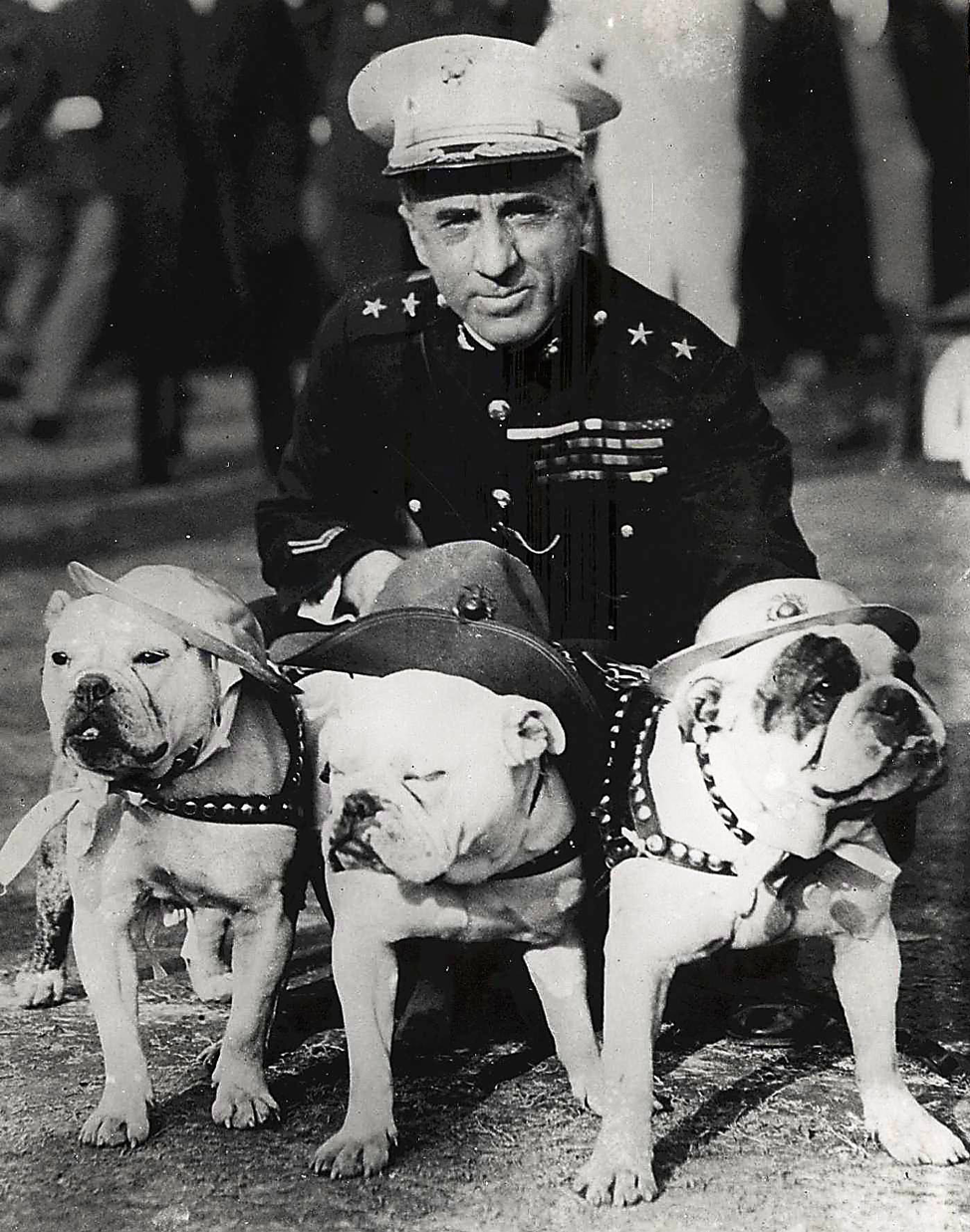
Maj. Gen. Smedley Butler
Mexico/Haiti, 1914/1915
Award: 2 Medals of Honor
Smedley Butler is one of 2 Marines who received 2 Medals of Honor for combat valor in separate conflicts. He was also awarded the Marine Corps Brevet Medal during the Boxer Rebellion in China (an award once used for living officers with precedence between the Medal of Honor and Navy Cross). Ooh-rah, sir! (U.S. Marine Corps photo)
Why it started
Sgt Grit,
I have been reading these post for years and have responded once but thought it was time to chime in again. In the spring of 1975 I was about to finish high school and was trying to figure out what I was going to do with my life. My oldest brother had already joined the Marine Corps and of course I couldn’t be less of a man then him. I told the recruiter that I was interested and got a couple of burgers out of him before I signed up. I was in the delayed entry program which was great since I got into a motorcycle accident right after graduating from high school and broke my wrist. I reported to boot camp the day after Thanksgiving that year. Ok let me give you a little back round info me. I was a B+ student who was into all sports and excelled at them and of course I was poor. With that said, I reported to boot camp without my glasses because I had broken them a few weeks before and couldn’t afford to buy new ones. One more thing I should mention was that I was wearing colorful overalls when I reported in. Well as you can imagine the DI’s were really happy to see me and the fun soon began. I enlisted in Seattle WA and landed in San Diego that night. I couldn’t figure out why it took all day for us to get to San Diego but we didn’t arrive until 2 am. Of course everyone knows what happens once we arrived, off the bus onto the feet and snap to attention whatever that is. Lots of yelling and screaming that didn’t make sense and then sent to get the proper attire and footwear. Finally we got to sleep in a bed and then guess what yeah you guessed it at 5 am were woke up with trash cans and lots of yelling. So with that said I will end this post and continue the story later.
Johnny M. Pilgrim
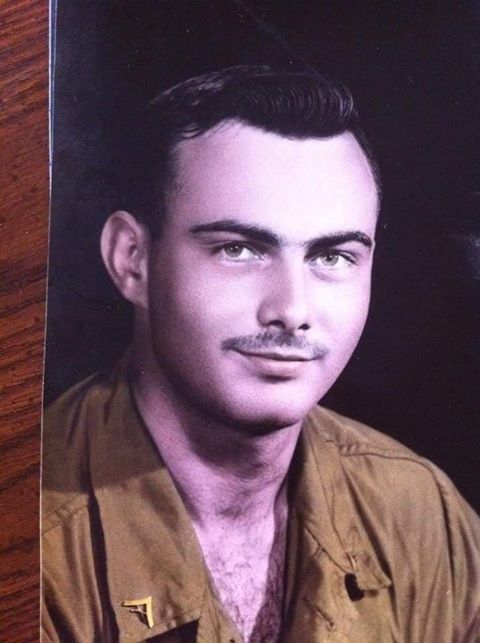
July 17, 1948 – May 3, 2020 A Memorial Service for Mr. Pilgrim will be held Wednesday, May 6, 2020 at 2:00 PM at Miller Family Funeral Home. Johnny M. Pilgrim was a beloved husband, daddy and papa, and an extremely loyal Marine. Johnny passed away peacefully at home on Sunday, May 3, 2020, at
the age of 71. He is survived by Jeanie, his wife of 52 years, his children Michelle and her husband Jason, Brad and his wife Kristine, and Mark and his wife Stacy, and grandchildren Kimberly and husband Rodger, Jordan and husband Connor, Will, James, Tori and Lilly. Johnny is also survived by his sisters, Charlotte, Faitha, Sue and Sheila. He was proceeded in death by his parents, Buddy and Marie Pilgrim, and his brother, Larry. Johnny was born in Pittsburg, Texas, on July 17, 1948, to Buddy and Marie Pilgrim. He attended school in Snyder, Texas, where he met his wife, Jeanie, the love of his life. Johnny joined the Marines at the age of 17 and served two tours in Vietnam. Between his two tours, Johnny took military leave and he and Jeanie married on March 15, 1968. In 1970, the pair welcomed their first child, Michelle. Sons Brad and Mark were born in 1973 and 1975. He was an incredibly hardworking man, wearing many hats over the years. Johnny left active duty in 1969 and continued to serve in the Marine Corps Reserves until 1989. He served many years on the Snyder Fire Department, both as a paid-man and a volunteer. As part of his EMT training, he did his clinicals in the E.R. at Cogdell Hospital with his daughter. Johnny taught for many years as the Diesel Mechanics Instructor at WTC. He also worked many years in the west Texas oilfields as a safety man. A man of great faith, Johnny was a member of the 37th Street Church of Christ in Snyder, Texas. In his spare time, Johnny enjoyed working on restoring his Cushman scooters, riding motorcycles and camping. One of his favorite pastimes was playing with his grandchildren and building them custom playhouses. He was also a skilled writer, and often wrote short stories and poetry. We will dearly miss his sense of humor and his unconditional love. In lieu of flowers, the family would like to request that donations be made to the Snyder Fire Department or the Big Spring Chapter of the Disabled American Veterans.


MARINE OF THE WEEK:
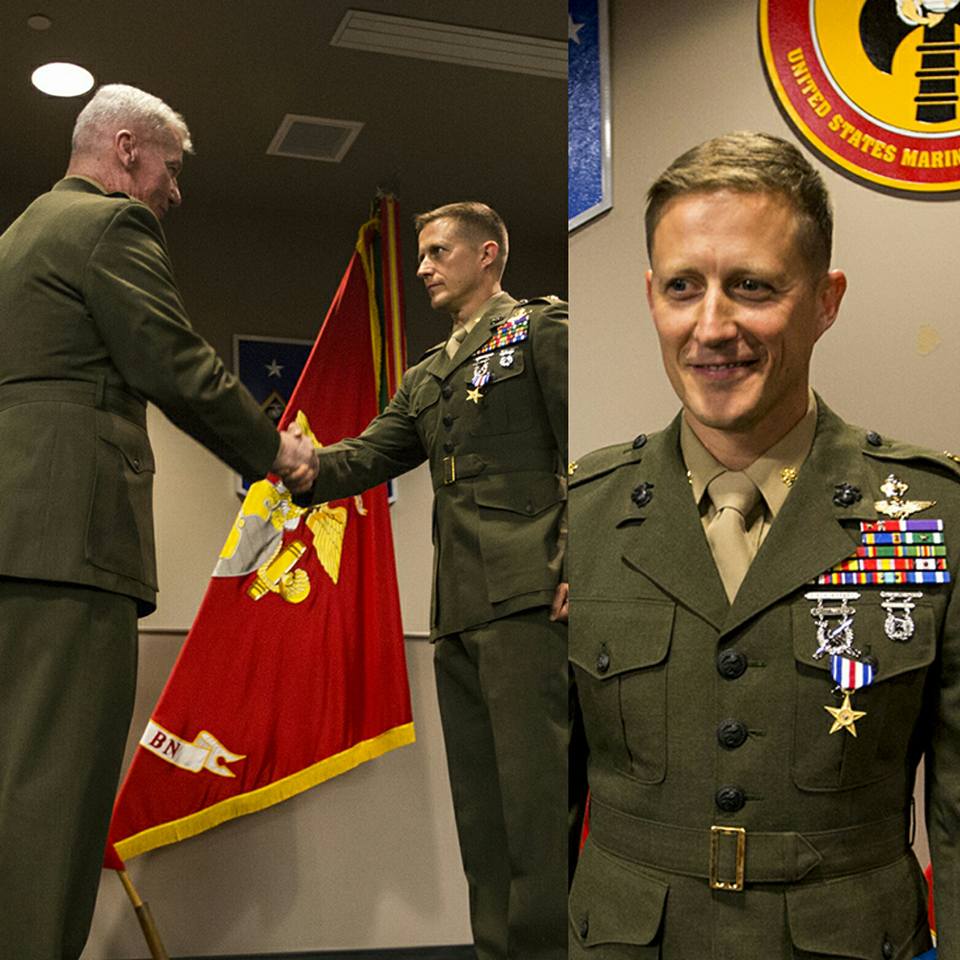
MARINE OF THE WEEK:
HERO PILOT
Maj. Robb T. McDonald
Marine Attack Squadron 211
Camp Bastion, Afghanistan
Sept. 14, 2012
Award: Silver Star
On Sept. 14, 2012, heavily armed enemy fighters infiltrated the Camp Bastion airfield, attacking coalition forces and destroying aircraft. Maj. McDonald and two other officers, armed only with pistols, immediately left the security of the billeting area, and maneuvered on foot more than a mile through an area dangerously exposed to enemy fire. When he reached the squadron maintenance building and learned his Commanding Officer had been mortally wounded, McDonald assumed command and began directing the tactical situation. Realizing the aluminum skinned building was indefensible, he fearlessly exposed himself by leading multiple groups of his Marines across 75 meters of open ground to get them to the more protected squadron headquarters. Leading a small team out to reconnoiter the flight line, he killed one enemy with a rifle he had borrowed, and then expertly coordinated two helicopter strikes to destroy all remaining enemy. McDonald’s decisive leadership and tactical expertise inspired his Marines to vigorously repel the enemy, thereby preventing additional friendly casualties and further destruction of aircraft and facilities. (U.S. Marine Corps photos by Cpl. Orrin Farmer)
’69 – 3d MPs War Dog
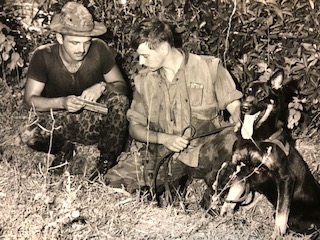
With the recent proliferation of stories about military working dogs (MWD) I thought I would add my two cents. This picture is Sgt. John Martino and a dog team from 3d MP Bn, and was taken in the summer of 1969. Martino was Guide for the H&S Bn provided platoon of the Provisional Rifle Company, which provided external security for the Force Logistics Command /Camp Books compound located about 1o miles north of DaNang. I think this dog must have been related to Conan. Hell, he looks just like him. Semper Fi!!!
AFTER THE CELEBRATION
On May 8th the world commemorated the 75th anniversary of the surrender of all armed forces of Nazi Germany, bringing to an end the fighting in the European Theatre. But for American GIs who had fought from the beaches of Normandy to Berlin’s doorstep, the celebrating was muted by the prospect that they would soon be transferred to the Pacific theatre. It was a very real fear, for the Japanese were tenaciously defending every inch of their shrinking perimeter. They closely followed news of the savage battle for Okinawa, which raged from April 1st to June 21st – a month and a half after the German surrender.
Yet to come was the Invasion of the Japanese homeland which, it was estimated, would cost 1 million Allied casualties – the toll in Japanese civilian lives would be multiples of that figure.
The expected shift to the Pacific theatre was unnerving in another way – the Japanese soldier, sailor or airman was a totally different opponent from the German. Following orders, they fought to the death, refusing to surrender in even the most hopeless situations. Fighting across the Pacific, from Australia to Okinawa, produced very few Japanese prisoners. They were fanatical and feared bringing disgrace to their family.
On the home front, the still defiant military leaders were training civilians – old men, women and children to resist battle hardened Allied troops with sticks and stones. It would take the dawning of the Nuclear Age, with the dropping of the only 2 nuclear weapons to ever be employed in combat, to end the deadliest, most savage, war in human history. Some depict that action as a “war crime”. In fact, it was the most humanitarian act of the war.