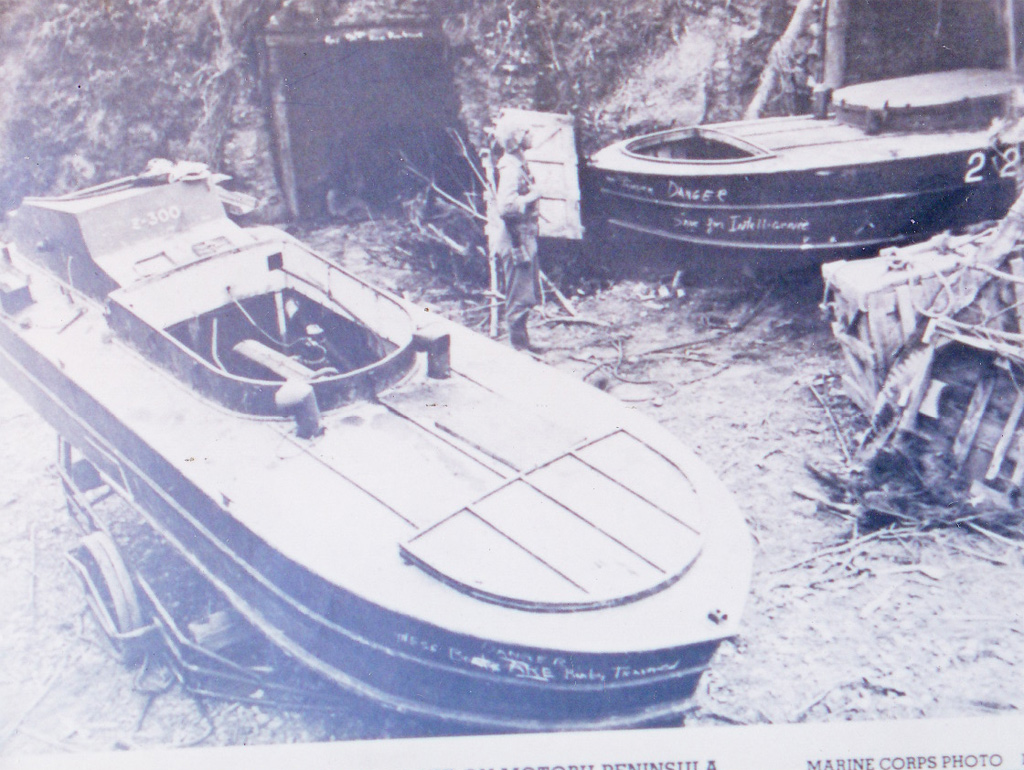
During the Battle for Okinawa most Marines are aware that the Japanese used Suicide (Hari Kari) planes against us. But there was more, they used Suicide Boats against us also. Inclosed is a picture of the suicide boats. Some boats had Ford and Chevrolet engines in them. They were not effective for lots of reasons, we had PT Boats and other types of patrol craft that kept them from being very effective, as soon as they began their run the PT boats were on them. There were problems with this idea on stopping the Hari Kari Boats also, some were armed with two depth charges, which went off at shallow depths which could cause damage to nearby ships and serious injury and death to American and Allied Personel.
Author: SgtGrit
Marines Song On Guadalcanal
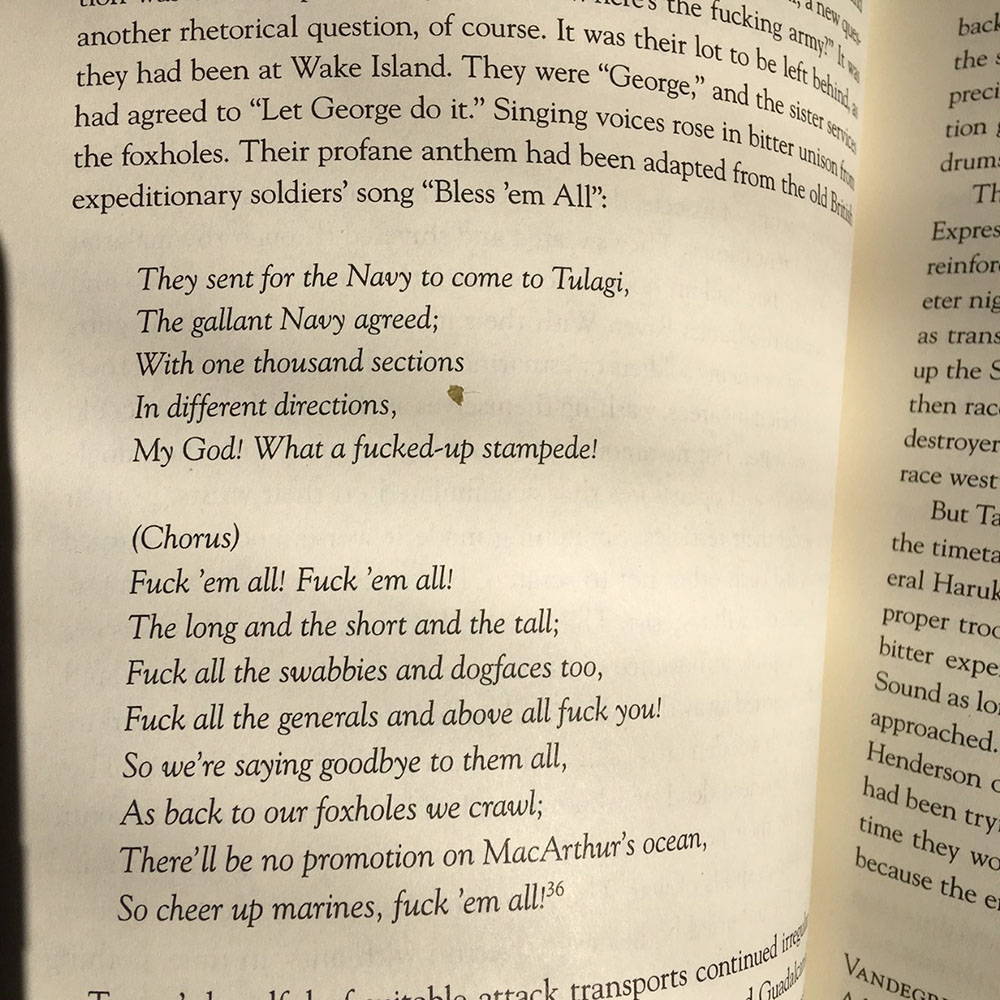
From the book “The Conquering Tide”… might use it if you changed some of the wording. Ha!
Joe Sagger
Colonel USMCR (Ret)
For 28 years I and several other Marines have tried… with no success….to have an Awards Board convened at HQMC to consider awarding Lt Colonel Althoff the Medal of Honor for his heroic actions in Vietnam. One of the most descriptive illustrations of Lt Col Althoff’s actions was written in an eye witness statement by LCpl James Barnerd: “I have never seen in my ten months in Nam any chopper come in while hell was blowing up.” I thought there might be some interest in our endeavor…and any help would be welcomed.
Duty to Remember
Drink with me … to memories of brothers from days gone by:
To those fallen in a far away place;
To those remembered on a black stone;
To those come home, now gone on up ahead.
To them … and to Us for remembering the beauty in our days together.
“It’s a Gas”
From July 1978 until my separation from active duty in January 1979 I was assigned to the 6th Marines Regiment S-3 office at Camp LeJeune as the Assistant Operations Chief. While stationed there I had the opportunity to join the camp skydiving club. $40 covered our training and the first three jumps. When we jumped we parachuted from CH-46 or CH-53 helicopters. Other than the jump suits and helmets, the equipment was provided by the club. After the first three jumps we only had to pay $1 per jump which helped cover the cost of buying lunch for the helo pilots. The club members included everyone from rookies like me to Marines who had hundreds of jumps to their credit. One of the things I learned when we put our parachute rigs on was that the harness was supposed to fit snuggly which could be pretty uncomfortable. After my 7th or 8th jump I decided not to tighten the harness as tight as I had in the past. The hike to the helicopter and ride to jump altitude were more comfortable than they had been in the past but I soon learned why it was important to keep the harness tight. When I jumped out of the helo and my parachute opened it felt like my groin had been yanked up into my throat. I didn’t even try to steer the parachute but instead was kicking my legs up and trying to loosen the straps between my legs. I was told later by my fellow club members on the ground that they thought that I had gotten my legs caught in the parachute shroud lines and was trying to get them untangled. Somehow I managed to land in the drop zone even though I never steered my chute. I laid there for a few moments trying to catch my breath and some of the other members came running over to check on me. When I told them what had happened they all laughed. I guess I learned an important lesson the hard way. I think it took me about a week to stop speaking in a falsetto voice and to walk normally.
Courage Under Fire
Article by Pete Mecca
CovNews
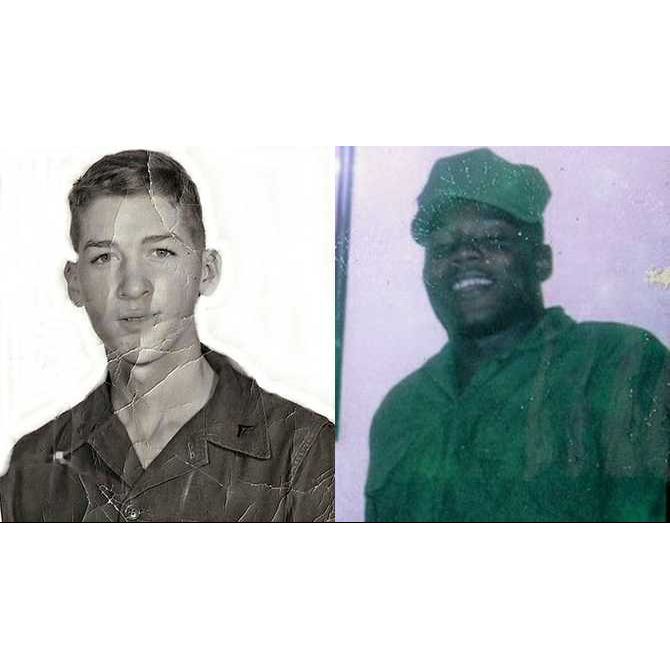
More than one Leatherneck would agree, it’s befitting that a young man from Montezuma chose to join the United States Marine Corps. The month was November, the year 1965, the man: Eli Fobbs.
“I remember basic at Camp Lejeune,” Fobbs said. “Back then the Corps didn’t play around. They’d insult your momma, sister your wife; shoot, those guys would bust your nose and scare you to death. It didn’t take me long to believe I’d joined the wrong organization.”
Pugil Sticks
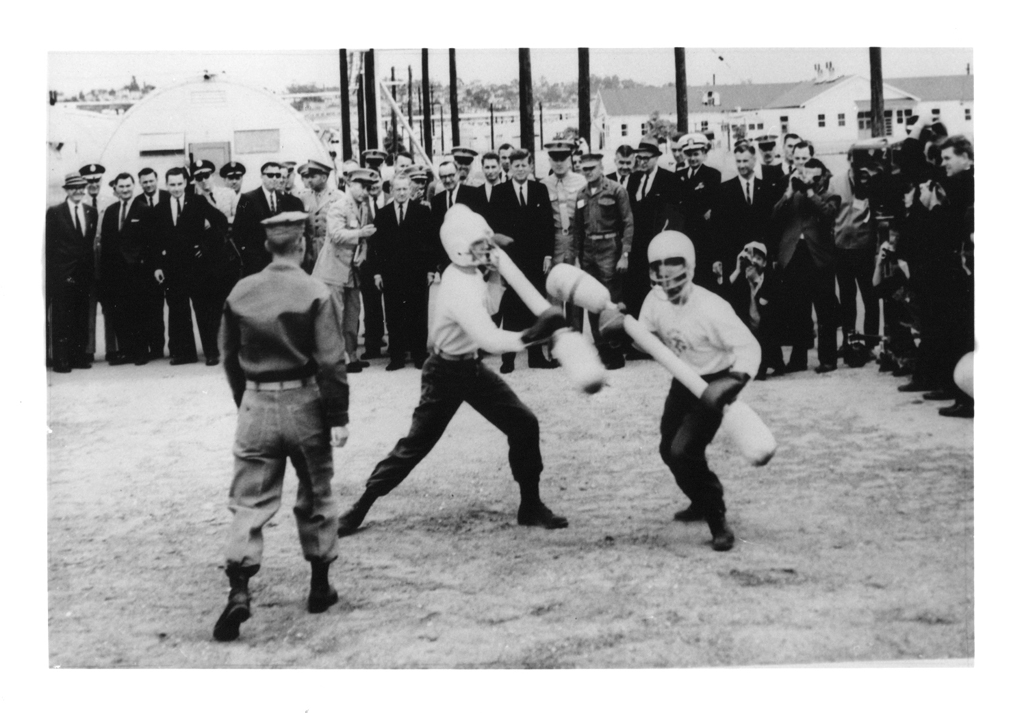
Photo attached of JFK watching the Pugil Stick training. My memory of this training goes all the way back to January 1957 when the sticks were in their beginning and had no padding whatever, just each end duck taped with a pad. As for we trainees all we had was a football helmet and no face guard also boxing gloves. No other body or groin protection. We just formed a circle and the DI would insert one, two or sometime three against one however his mood at the time.
RECON Hill 200
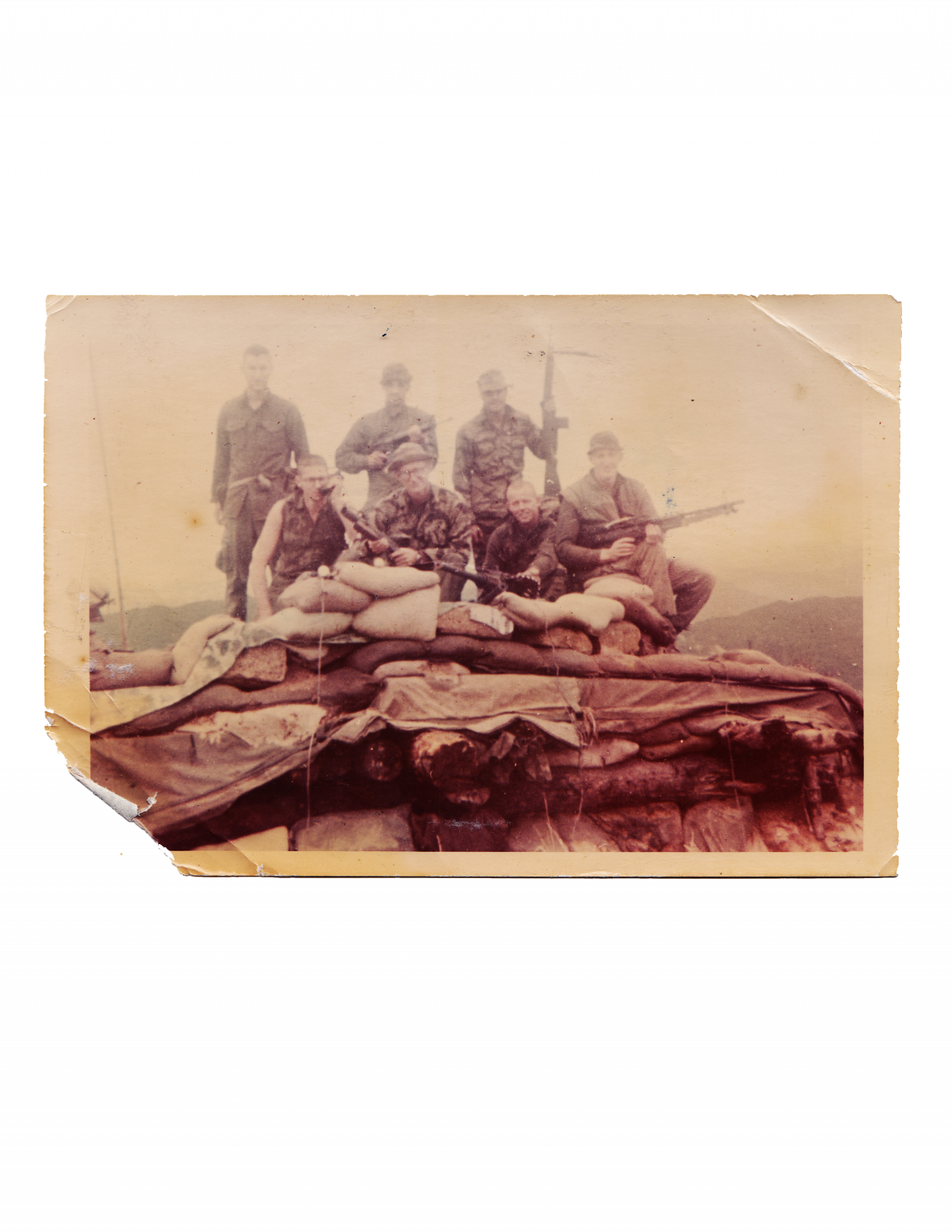
I served proudly with First RECON Battalion – First Marine Division during the 1968 Tet Offensive in Vietnam. I was an young NCO Scout Sniper with RECON Team Rio Grande, Echo Company. We spent time on Hill 200 defending this radio relay station and setting up for patrols into the active valleys below.
One of our toughest missions was locating and destroying incoming mortar and NVA artillery positions surrounding Marine Corps Base Khe Sanh. RECON Marines were Wanted Dead or Alive as the yellow NVA poster reads.
The attached photos depict just a brief moment in a young RECON Marine’s Life…
“Rough Amtrac Ride”
In the fall of 1976 I was assigned to Bravo Company 1st Battalion 8th Marines. We were on a three month NATO training cruise to Norway, Denmark and Germany. When we made our first landing in Norway the ride to the beach in the amtracs was pretty rough. One of the corporals in our tractor was having a particularly difficult time and began to “lose his lunch”. He did what we were trained to do and removed the helmet liner from the steel pot and threw up in the pot. When we pulled onto the beach the rear ramp was lowered and we ran off. As the corporal, with the helmet full of spew, ran off he proceeded to throw it out. Unfortunately there was a photographer in the “line of fire” and he took a direct hit. We ran around the front of the tractor to the beach head where we hit the deck to await further instructions. Suddenly there was the sound of applause coming from our right. I looked over to see bleachers filled with spectators. I learned later that there were various dignitaries from NATO, Norway (including the Norwegian king) and other European countries present. While we were waiting to move out I saw the “lunchless” corporal nearby. He had placed the liner back inside the helmet and put the helmet on his head. The remaining vomitus was steadily dripping from the edge of the helmet. A NATO official, who was monitoring the landing, walked by, looked at the corporal and walked away shaking his head and smiling.
Hill 200 or 250
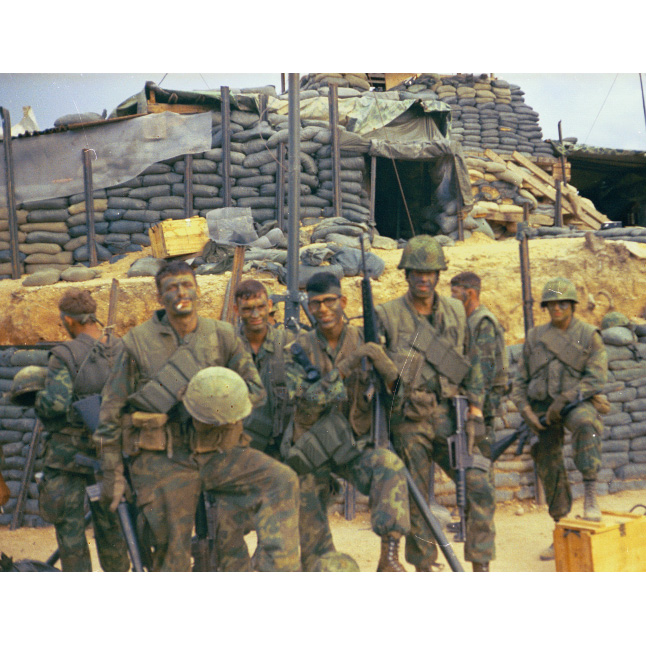
I was the the officer in charge of Hill 250 from January 1969 until September 1970. 1st Recon was sent to the hill to provide security for the IOD and my men and I, in that order. We had thermite (sp?) grenades strapped to the IOD. Our job was to destroy it should we get over run. The IOD (Integrated Observation Device) was my responsibility. I remember the dozer being brought to level some high ground adjacent to our hill.