BOOT CAMP PICTURE

First time to write but have been a customer for several years enjoy and look forward to the newsletters weekly, keep up the great work.

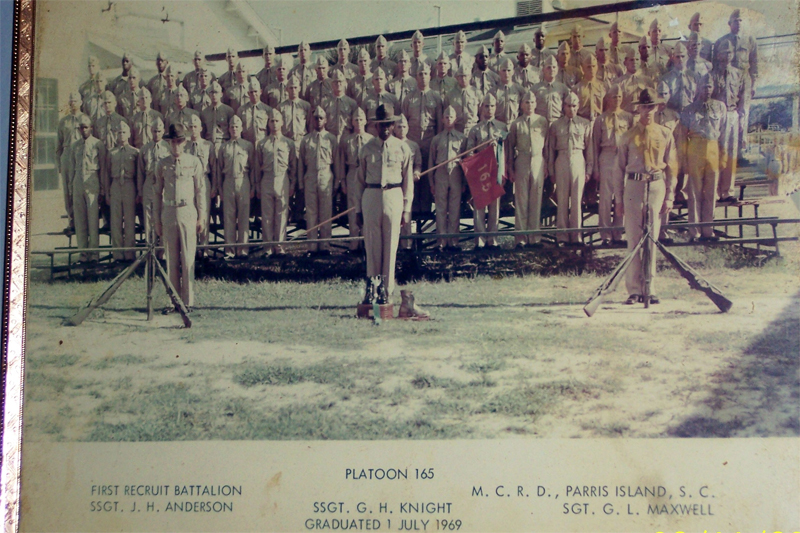
Wanted to send this picture of my bootcamp at PI we were honor platoon, I am standing front row right { the guide tip is at my right shoulder } if anyone out there remembers or was in this platoon. Also had another DI Sgt Cruz who had to leave on emergency leave to Guam and Sgt Maxwell took over for him. Also anyone from Hotel Co. 2/7 RVN 70/71  @ LZ Baldy,Ross,Ryder. I must be old corps as I have serial # 2548402. read more

Don’t forget the paperwork

When I enlisted in the Corps, my mother told me not to trust everything the recruiters told me, keep a copy of EVERYTHING that I came in contact with. Not to slam recruiters, but it's still a wise choice. I kept everything from the recruiter including my "honorary" PFC stripe for doing a few months recruiting duty prior to boot and my "guaranteed" contract to go to electronics school at 29 Palms. read more

vmf 311 story

enjoyed the story and vmf 311 insignia in todays sgt grit…i was in vmf 311 from 57 to 58 ..we subsequently were redesignated vma-311…i have seen several versions of the squadron patch but cant find the one we had in that time period …it showed sylvester holding a flaming rocket in his teeth!…would like more info on where to find this patch or decal…..the ones i had are long gone!!!  SEMPER FI MARINES !!!!! read more

Tail Sticking out

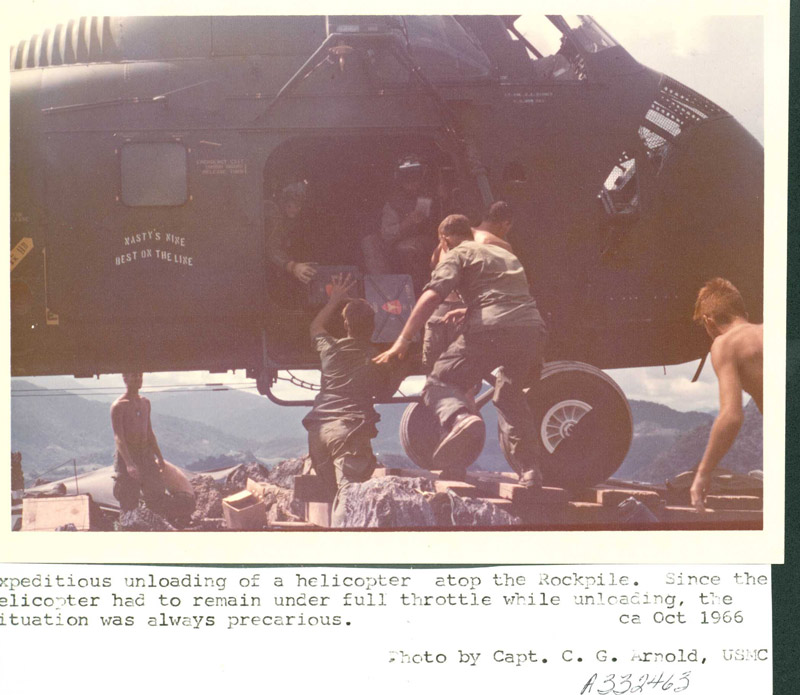
An UH-34 in the air at the Rockpile. If you look close, you can  see T.L. Smith standing in the door of his UH-34 with the tail  number 6 on it. How Many Marines have a picture of themselves  taken in the field while flying a resupply mission to those of  us who held the Rockpile? They were our "Life Line", and I'd  like to be able to thank him after 45 years.   If you don't know about The Rockpile, the attach word file is  from Time Magazine in Oct 1966.  S/Sgt. Ted Dudley   Time Magazine, October 1966   The terrain was as tough as any the U.S. Marines had ever  contested. It combined the horror of a Guadalcanal jungle with  the exhausting steepness of the slopes at Chapultepec. Added to  that were fusillades of bullets as ferocious as at Tarawa and  showers of shrapnel that turned the forest into a tropical  Belleau Wood. But "the Rock-pile," as Viet Nam's latest big  battleground has come to be called, is weirdly unique. There,  just south of the inaccurately named Demilitarized Zone, a task  force of six Marine battalions has been battling two entire  divisions of North Vietnamese regulars whose apparent aim is to  invade Quang Tri province. So far the Reds have failed. Over the  past few months, Hanoi's hordes have shifted away from their old  infiltration route, the Ho Chi Minh trail, which empties into  the isolated Central Highlands. Instead, more and more have been  striking directly southward into the populous coastal plain (see  map). The aim of the Marines' "Operation Prairie" is to cut  those arteries from the DMZ and push the Reds so far west that  they will once again be forced to use the trail.   Key to the fighting is "the Rock," a jagged, 750-ft. fang of  granite that thrusts upward at the intersection of three river  valleys and two enemy trails. During July's Operation Hastings,  the Marines established a reconnaissance post atop the Rock, and  a lone sniper fed by airdrops of C rations controlled the area.  Now it is a Marine battalion command post, under almost steady  siege. Across from the Rock rears the Razorback-a steep ridge  whose sides are pocked with caves dug by the Japanese in World  War II, but now occupied by North Vietnamese. Several hundred  yards below the Rock, the Reds have dug "spider holes" from  which they lob mortar fire and mount ambushes. Two miles to the  south stands Hill 400, dominating the Rock-pile and infested  with Reds. Last week the Marines moved simultaneously against  the Razorback and Hill 400. By week's end, both were in their  hands.   Snakes & Lanterns. Fighter-bombers seared both hills with  flaming napalm, then returned with rockets, heavy fragmentation  bombs and machine gun fire. For three days, the Reds on Hill 400  hit back with mortar and small-arms fire so intense that Medevac  helicopters could not land to take out Marine wounded. Finally,  Marine pilots used 1,000-lb. bombs to blast craters deep enough  to provide cover for the choppers, and a few critical cases were  evacuated. Then the Marines moved out, stormed the hill with  satchel charges,* and blasted the Reds out of their holes. They  found a Communist regimental command post replete with  underground rooms and trenches.   Near the Razorback, Marines were treated to an eerie spectacle  at night: dim lanterns moving back and forth on the ridge across  from them. "The North Vietnamese are afraid of snakes," sneered  one Marine. "That's why they carry them flashlights." Whatever  their purpose, the lights provided excellent targets for  artillery and air strikes. To date, Operation Prairie has killed  943 Reds, and the Marines have taken moderate casualties in the  process.
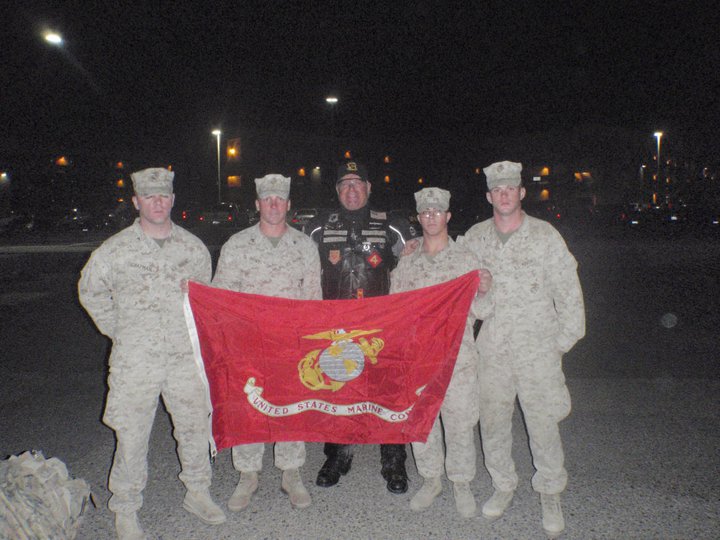
The Sgt Grit USMC Flag which traveled to Helmaud Province and back

On Super Bowl Sunday, 2010 the Combat Engineers from Knoxville, Tennesse met the Iron Horse Marines RC  in Palm Springs, California.  When the engineers deployed to Afghanistan that April, they were escorted to March AFB by the club and took with them the USMC flag which was purchased from Sgt Grit.  This picture is at 0300 after being escorted back to  29 Palms MCAGCC in the middle of a night in November by the same Iron Horse Marines.  The flag was signed by all the members of their platoon in honor of the men they revered – Corporal Kristopher Daniel Greer and Gunny Holley – both whom lost their lives as a result of IED wounds and did not return with them.  The flag has been placed in a permanent place of honor for them, their families, and the Combat Engineers serving with them attached to the 3/1 Thundering Third. These Marines were all highly decorated because of their actions.   Respectively submitted, former USMC Sergeant, Longshot,   Palm Springs, California

Not in a Division or Wing

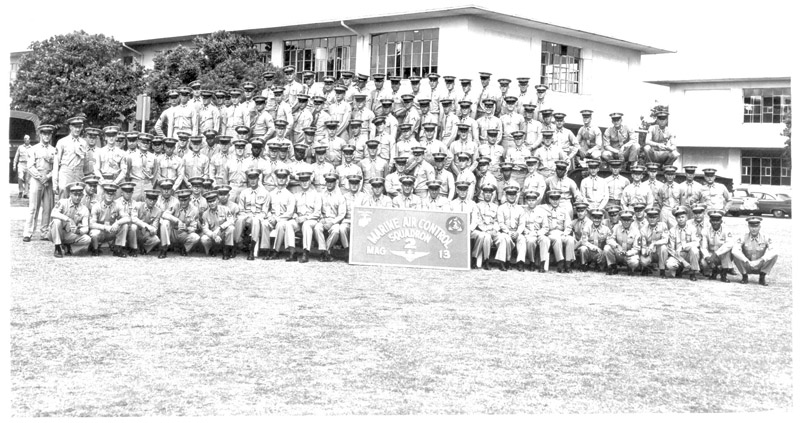
Sgt. Grit,     Many times when I meet Marines on the road or in the Marine Corps League, I try to tell them that there was a Regiment (4th) and a MAG (13) that were neither part of a Division or a Wing.  This picture was taken when I was stationed in 1959 at MCAS Kaneohe Bay when the 4th Marines and MAG-13 were under one command known as the 1st Marine Brigade.       Pete Kristall   Marine Corps League Life Member

Amtrac Story

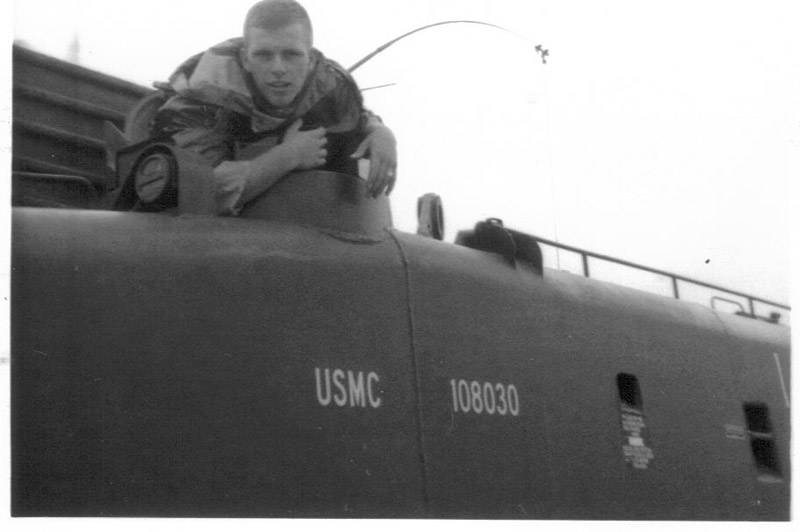
Hello Sgt Grit,   Here my story for you. We in Amtrac were known as Amgrunt, had the Tracks to drive but we  did alot of foot patrols. When I first got to 1st Amtrac up by the Cua Viet river we had to be a initiated into the platoon, this was done to see if we could work together as a team, first the old timers would put a ring of sand on the ramp of the amtrac, next we took a few swings with a sledgehammer to see if we could hit the center, then came the blindfold, to see if we still could hit the center, but unkown to us we were beating the h-ll out of our cover[ keep mine for a ong time]. Sure had a good time doing it too the newbees, But my first time was cut short, on my first patrol to the DMZ I was wounded, spent the next 41 days in the hospital at Cam Ranh Bay before I went back to my unit. sending you some photos of the first copterIi took a ride on, I was on a stretcher up by the door, talk about a cold ride,[ but another story]. here are some pictures of me and the Amtracs. Thats me looking out of the drivers hatch. Use the ones you want,   Semper Fi Sgt. Larry Walker Nam 67-70

Pointing Up

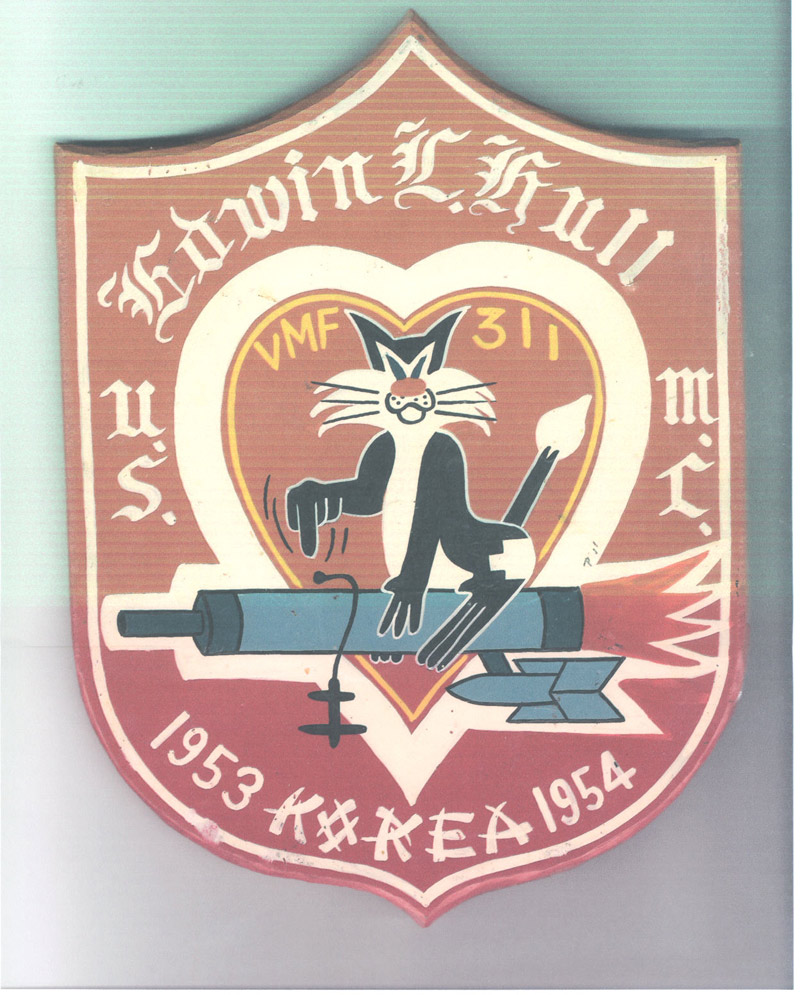
I thought it might be a good idea to send you a copy of the  plaque of our fighter squadron during our battle to kick the  sh-t out of the North Korean and Chinese troops trying to take  all of Korea to communism.   This plaque actually showed Sylvester's finger pointing up but  Eleanor Roosevelt didn't like it that way so it was switched  down. At least that was the story that was spread around.   Ed Hull