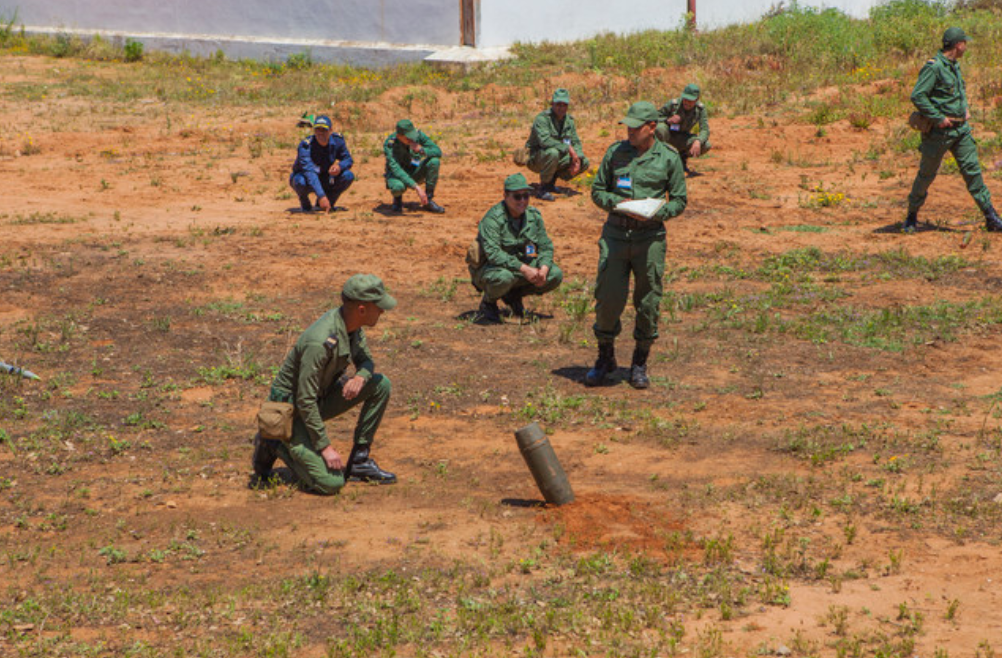
U.S. Marines and Sailors with Special Purpose Marine Air-Ground Task Force-Crisis Response-Africa 19.2, Marine Forces Europe and Africa, participated in Humanitarian Mine Action with members of the Moroccan Royal Armed Forces April 1-26, 2019, at Unite de Secours et Sauvetage’s Base, Kenitra, Morocco.
Reflections in Stone
Thoughts during a few moments spent standing, staring at a vertical slate of black marble; only vaguely aware of the rain drenched figure standing, staring back; unable to move any closer; unwilling to turn away. All the names in chronological order, left to right, as need dictated. All needed on a given day clustered together. He was there, but it was so much easier not to look or find. Surrounded by the others, he remained silent. When identified, he would cry out. Raindrops fell and a gentle, cold wind chilled my finger as it traced a path down the dripping slate.
COURAGE COMPELS COMBAT ENGINEER MARINES TO SAVE LIVES
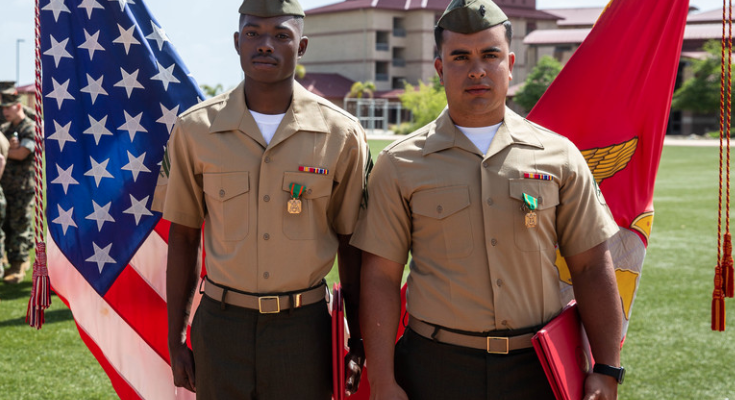
Courage is the mental, physical and moral strength to persevere and withstand danger, fear or difficulty. It is the heart of the core values instilled in every United States Marine and is what defines their character and warrior spirit.
It is with this courage that Marines with 1st Combat Engineer Battalion, 1st Marine Division were able to do what is right and necessary when they were faced with critical challenges throughout this past year. In the last twelve months, nine Marines from 1st CEB saved the lives of three people in completely separate events in our community.
ENHANCEMENTS UNDERWAY FOR CORPS’ HANDHELD TARGETING SYSTEM
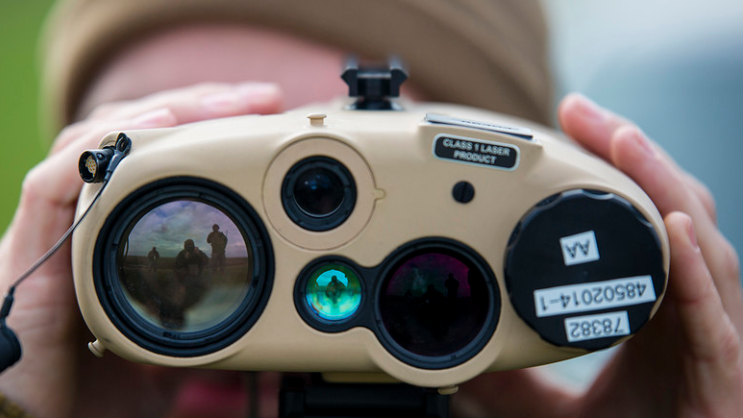
The Marine Corps is integrating new technologies into an existing handheld GPS targeting system that helps Marines locate adversaries on the battlefield.
Fielded in 2017, the Common Laser Range Finder-Integrated Capability is a handheld target location system that uses an eye-safe laser range finder and algorithms to determine a target’s location. It then transmits that location to the Advanced Field Artillery Tactical Data System or another fire support system.
Sergeant Major
After several tours in combat situations, I agree that my scariest days as a Marine was at PISC in 1975. My third day there I was underneath my bunk with a SCUZZ BBRUSH sweeping up GHOST TURDS and thinking to myself What in the H*ll did I get myself into? I was a star football in high school but those Drill Instructors scared the Sh*t out of me!
Courtesies and Customs
I enlisted in 1976 in the Marine Corps, went to boot camp at San Diego, went to admin school at Camp Pendleton. did a tour in Okinawa, and reported to MCDEC Quantico, Virginia in 1978. While there I was assigned to mess hall duty. One day, I received verbal instructions from either a gunnery sergeant or a master sergeant who was in charge of our kitchen detail. My response was a prompt “Yes,sir!”. The senior enlisted dutifully reminded me to not call him “sir”, that he worked for a living. I responded with a thought from my upbringing in Texas: “With all due respect, I was always taught to respect my elders.” There was nothing more said from the E-7/E-8.
SH*TBIRD! How I Learned To Love The Corps
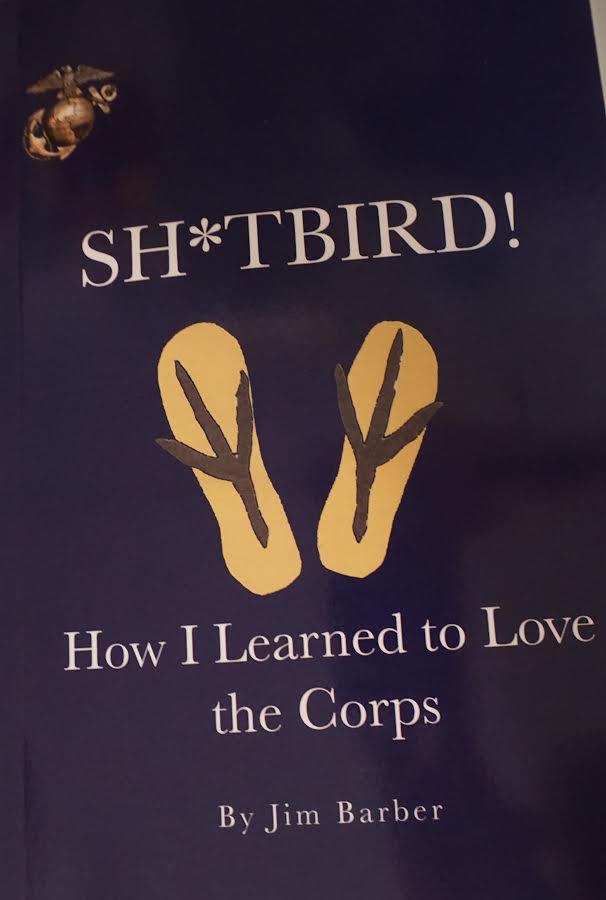
Marine vet Jim Barber has compiled a collection of very funny stories about Marine Corps boot camp as told by those who were there. More than 90 very funny stories submitted by Marines, following the age-old tradition, who innocently left their secure, teenage life to blunder into the upside-down world created by the need to transform them from their soft civilian selves into the proud brotherhood they became. This book will be appreciated by all vets who went through some form of boot camp, as well as by civilians. But it will be most enjoyed by Marines who, wherever they congregate, find the conversation always goes back to who had the toughest D.I. While not always so funny at the time, we can now look back, laugh, and say “Yeah. That was me. A real shitbird.” GREAT BOOK FOR VETS. Ask for an excerpt.
Freedom Eagle
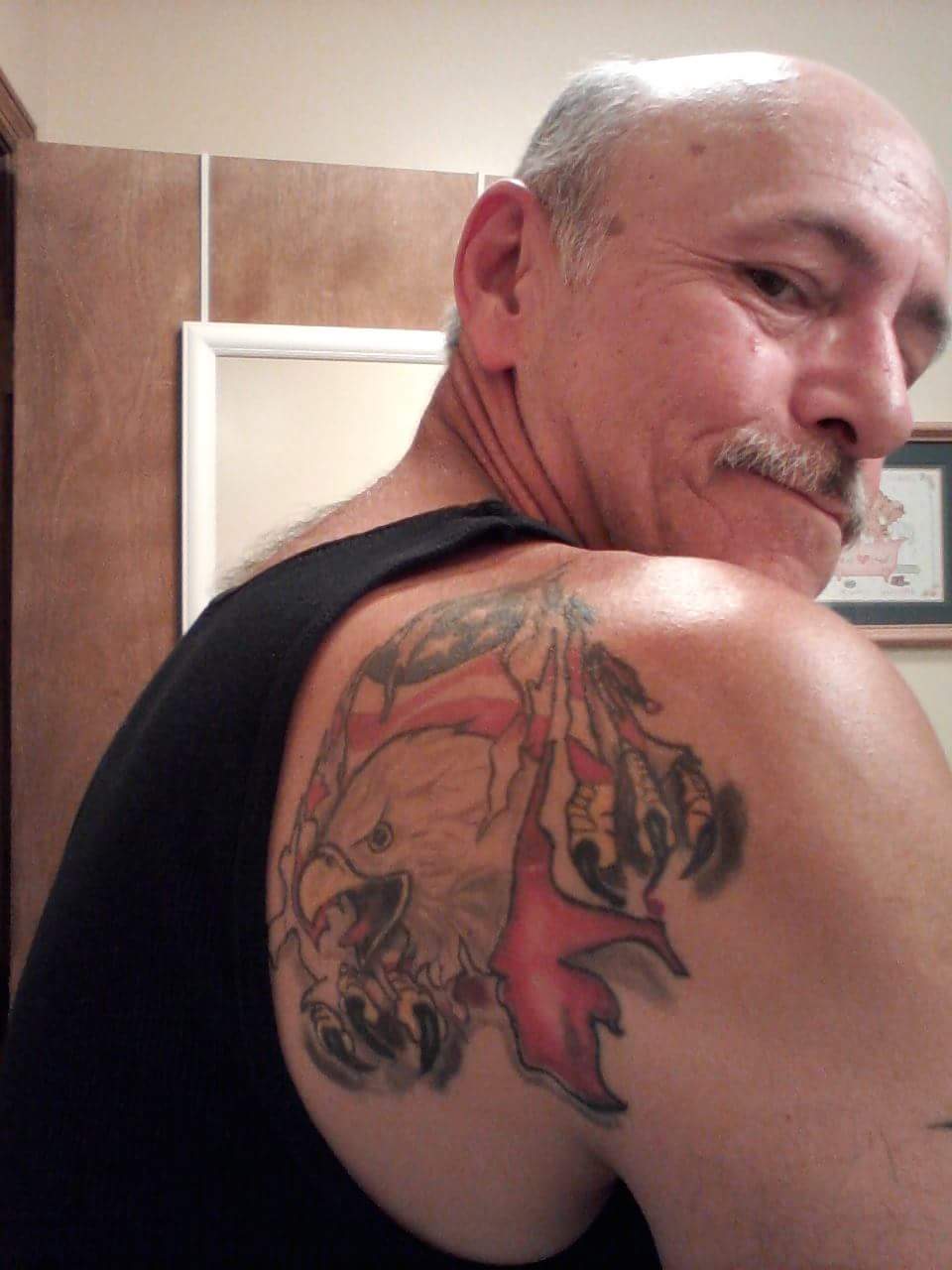
Freedom Eagle clawing out of my shoulder.
AN AMERICAN HERO PASSES
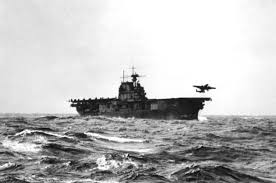
U.S. Army Air Corps Lieutenant Dick Cole’s passing Tuesday, April 9th, raised barely a ripple of interest. But Lt. Cole was a genuine American hero. Today’s youth display scant knowledge, interest or patience with the history of the blood that has been shed to raise them to their current sheltered existence, of which they do much complaining. It is men and women of such courage and dedication to freedom that has assured them that privilege.
Lt. Cole was the last surviving member of an elite group of 80 Airmen who, in one of our country’s darkest hours, gave it hope that by courage and dedication, America and our allies would prevail against the axis forces. Under the command of Colonel James Doolittle, this small band struck the first American offensive blow of the war against Japan, shocking that nation and its leaders to know that America had just begun to fight.
Japanese commanders were humiliated, confused and confounded because they had no idea from where the aircraft had launched the attack. The B-25 medium bomber required 1000-2000 feet minimum of runway to take off. They paused offensive planning and refocused on Midway Island which became a pivotal battle and turning point in the Pacific War.
Of course, the Doolittle Raiders had been launched from the aircraft carrier USS Hornet in an amazing feat of cooperation between the Navy and Air Corps, a feat that was thought impossible by most everyone except Jimmy Doolittle. His all-volunteer unit had been training and practicing short-runway take-offs without knowing what they were going to be asked to do. When they boarded the Hornet, watching their aircraft being swung aboard they assumed they would be off-loaded elsewhere. Once at sea, Doolittle finally told them the plan. He gave every man a chance, no repercussions, to back out of what seemed like a near-suicide mission. The plan was to get close enough to Japan so that they could make their bombing runs, fly straight on to mainland China to land at a Chinese airstrip. Unfortunately, the small fleet ran across a Japanese fishing trawler. Afraid that the boat had radioed Tokyo of their presence, it was determined that the raid had to be launched immediately – 200 miles farther away from their target than planned. It was almost a guarantee that fuel would not last long enough to reach the safety of the Chinese army lines. Again, every man was given the chance to back out, with no stigma attached. Again, every man stood fast. To make matters worse, the fleet was in storm conditions, the bow of the Hornet dipping so deep that water was spraying over the end of the flight deck. The navy launch officer had to time every dip just right. The pilots would run their engines up to top speed while standing on the brakes, then release and hope the timing was immaculate – which it was for all 16 aircraft. No power assisted take-off was available in those days – just the guts and skill of the pilots and navy personnel.
Though it did little damage, the bombing and strafing of Japan by 16 American aircraft was a scandal that shook the confidence of the Japanese people and their leaders. 15 of the aircraft crashed, 3 men were killed in action, 8 were captured, 3 were executed and one died in captivity. One crew landed in Russia and was quarantined there. The rest miraculously survived after parachuting from aircraft flying on fumes, were rounded up by Chinese nationalist troops and civilians and taken to safety.
The Doolittle Raid is an iconic example of bravery of which all Americans, and especially the youth of our country, should be aware. That the last surviving member of that heroic band of men would pass with so little notice is tragic. How can we expect young Americans to fully appreciate what they have inherited if they do not know, or understand, what has been sacrificed for them.
Desert Storm action
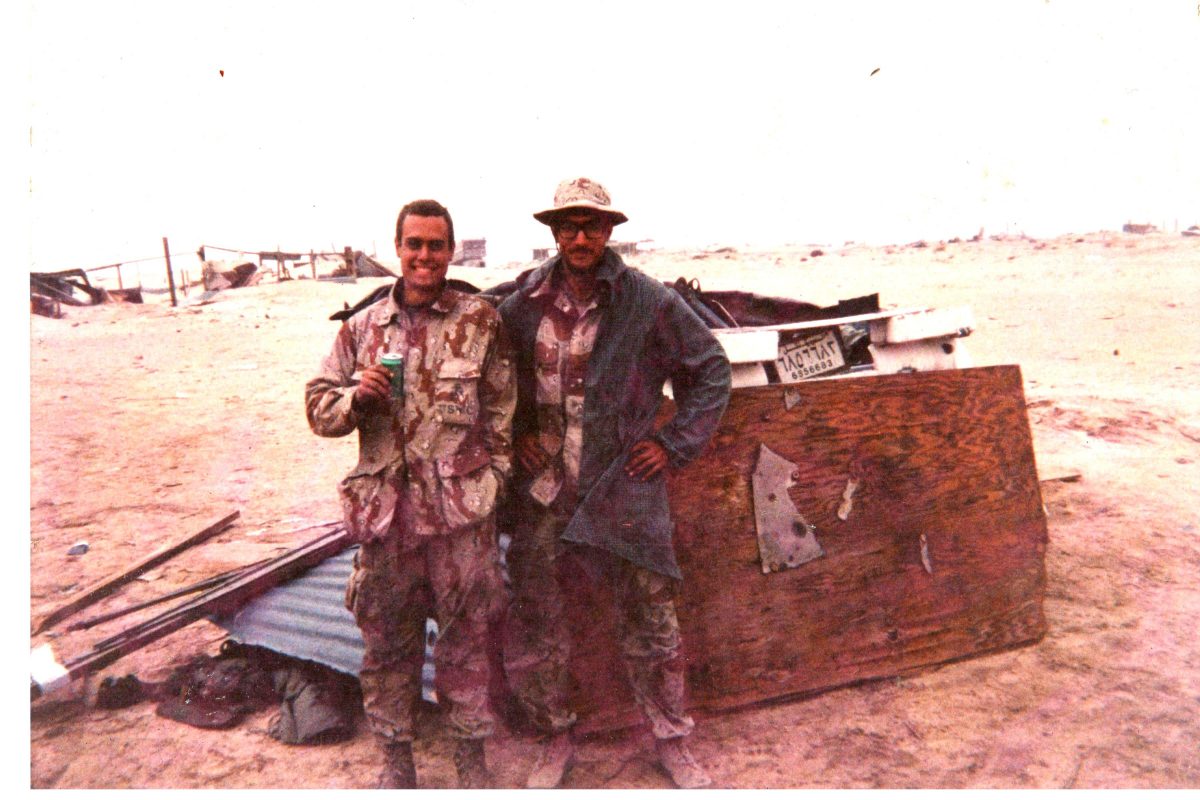
Semper Fi y’all, I am an 0311 ground pounder from the Montgomery, AL reserve unit that was deployed to Saudi Arabia and saw action near Kuwait City. Our unit was Hotel Company of the 3rd Bn 23rd Marines (4th Div). Our unit followed behind the 2nd Marine Division when they rolled into Kuwait. I guess we were protecting the rear and eventually taking a position outside Kuwait City where we remained for a month or two after all the other units left Kuwait. It seemed to us that there were a few Iraqis who hid from the 2nd Div but grew brave when they saw us as we had a handful of engagements. There was only one Abram attached to our unit so we appeared less intimidating. I rode in the back of a Mercedes cattle truck we comondered after its driver fled the Iraqis. Our truck was 2nd to last in a column because it would get stuck in the sand. The last six bi would push us along. Approaching a small farm village an Iraqi fired at the front of the column. After taking position along the side of the road, the last two trucks were selected to patrol for the “sniper.” Not in an emotionaly healthy state of mind, I volunteered for point. I walked through a couple of goat pins and stood in the gateway of a sheet metal fence. Twelve feet to my left Corporal Rouse our shortest man had a green tracer pierce the fence above his head. I hugged the dirt and watched a sea of red tracers fly toward the grain silo the Iraqis had fired from. Anyway, mostly the Iraqis were ready to surrender. So, there aren’t a lot of combat stories from Kuwait but there are some Storm vets with combat action ribbons. Corporal Vickers 1991.